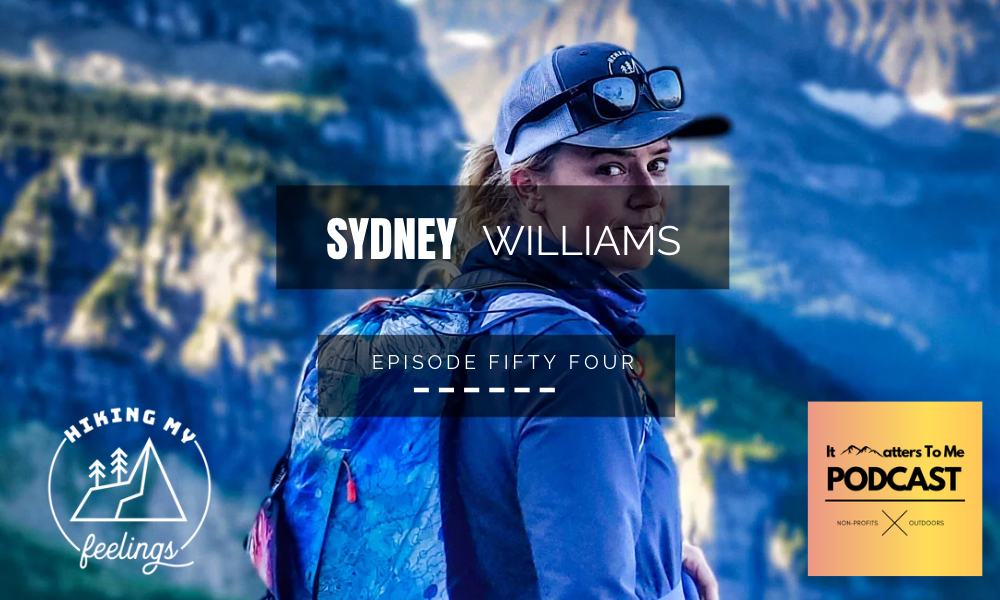
Sydney Williams is the founder of Hiking My Feelings, a 501c-3 organization that uses programs and events to cultivate a judgment-free space where transformational healing is possible. They introduce people to mindfulness and the healing power of nature, and the results are lasting improvements to mental, physical, and spiritual health.
Prior to this, Sydney was on the club rowing team at the University of Kansas and a competitive skydiver who unexpectedly found herself receiving a Type 2 diabetes diagnosis while also grabbling with unresolved trauma from a decades-old sexual assault.
After two hikes across Catalina Island on the Trans-Catalina Trail, she founded Hiking My Feelings to help others tap into the mind-body connection and healing power of nature that helped kick her self-limiting beliefs and disease into remission.
Sydney just exudes positivity and puts that energy into helping others heal from their own traumas.
We talk about how her professional background at the executive level in charge of marketing and PR has helped her turn Hiking My Feelings into a sustainable organization waiting for its “tipping point” moment.
Additional Links
Hiking My Feelings (Website): https://hikingmyfeelings.org/
Hiking My Feelings (Instagram): https://www.instagram.com/hikingmyfeelings/
Hiking My Feelings (Book): https://hikingmyfeelings.org/hiking-my-feelings-book
Hiking My Feelings (YouTube): https://www.youtube.com/c/hikingmyfeelings
It Matters To Me (Instagram): https://www.instagram.com/adamcasey/
It Matters To Me (YouTube): https://www.youtube.com/@itmatterstomepodcast
It Matters To Me (Website): https://itmatterstomepodcast.com/
Partners and Sponsors
Naked: https://nakedsportsinnovations.com/
Transcript
Adam Casey: Sydney, welcome to the show. It’s an honor to have you on.
Sydney Williams: Thanks for having me. I’m excited to be here.
Adam Casey: You know, you’re the executive, you’re, no, you’re the founder, uh, and I guess executive director of hiking my feelings. And you’re the author of a book by the same name. You’ve done some really incredible stuff.
Adam Casey: Um, but before. We get into any of that. I like to start each episode with a question that I think gives the listener a little bit of an insight into who the guest was it is today before they arrived on the show. And that question is, if I knew you growing up. What kinds of stories would I tell about you?
Adam Casey: I
Sydney Williams: love this question. Um, and like in my mind right now is like this montage of moments that I was like, like I was like just like spinning a deck and then like picking one. Um, And I think the story that you’d probably lead with that both explains me as a kid and me as grown Sidney is, uh, back in the day on our first vacation to Walt Disney World.
Sydney Williams: Um, first and only because my sister and I were terrible. Let’s be clear. We fought the whole time. Uh, but one moment of glory was getting off of the bus, um, pulling, like we were staying at the Polynesian resort. We took a bus to somewhere, who knows, or maybe we were going back to the hotel. Um, but I was a cheerleader, and uh, I did a toe touch on my exit, except my feet got stuck in the door, so I just got, like, face falling out of the bus, and for the rest of my life, like, I’ve, I’ve always been tempted to recreate the moment, but I I think grown Sidney would bounce back as quickly as little Sidney did.
Sydney Williams: So I think it’s kind of like illustrative of my zest for life. Like, let’s just do a toe touch. Um, and my capacity to get up when things are impossibly hard. So that’s probably a good one to start with. And
Adam Casey: I, and that’s, that is a great story and a great way to kind of transition. Um. I, I can’t say that I’ve ever tried to do a toe touch.
Adam Casey: I don’t think even in my most athletic of days, I would have been able to. And I, uh, I can totally empathize with this probably associating, um, something like that with now Walt Disney world. And maybe every time a commercial for Walt Disney world comes on and you’re just can’t help, but think about, uh, face planning, but, uh, but yeah, but that is, that is a great.
Adam Casey: It is an illustrative, uh, example of who you are today because who you are today is quite impressive and you’ve definitely made, you know, good use of some of the things that you’ve been through in life and I forget who’s, who’s quoted is, but it’s, you know, don’t let a good tragedy go to waste kind of thing.
Adam Casey: And so, but some of the things you’ve gone through, uh, you know, we’re going to, we’re going to talk about and, but hopefully we’re going to. Highlight the more positive things. You mentioned you were a competitive cheerleader. So, you know for any listener out there who’s not from the Midwest Sydney and I, you know, even though I don’t think either of us really give a shit Technically we both come from rivalry schools where you went to KU and I went to Mizzou and so Again, I could care less about any of that stuff, but I would love to hear how you went from attempting toe touches off of a bus in Walt Disney World to then being a Division I, you know, athlete at University of Kansas.
Sydney Williams: Uh, well, I’ve never actually come into this story at this angle before, but I guess I gotta thank my mom for instilling the fear of being fat in me and telling me that I was fat. Too chunky to be on a coed cheer squad. Um, because if I hadn’t heard that and if I didn’t deeply believe it, um, I probably would have tried out for the University of Kansas cheer squad.
Sydney Williams: I probably Would have been deeply disappointed because I was a base, not a flyer. Like I wasn’t the girl on top of the sun. I was the one chucking people in the air. Um, and on a co ed squad, like they need, they have boys that do that. So like they didn’t need me. Um, so thanks mom for, for making me feel like that was the scariest thing I could possibly experience.
Sydney Williams: Um, because what did happen was I went to the university of Kansas on attached to any kind of team experience, which. Was completely new to me. I dabbled in everything wasn’t great at much growing up But I like teams were always part of the thing that I was Doing and so going to the University of Kansas during orientation like I would just walked into student orientation They got all the clubs.
Sydney Williams: They got some, you know different inner extracurricular activities things You can join and I saw the women’s rowing team and I was like, yep. This is it Why don’t know have I ever rode before? Nope. How tall am I five four on a good day? Small enough to be a coxswain at the front of the boat. Nope. Too chunky for that.
Sydney Williams: So it’s like, I don’t, I like, I don’t know how I actually landed there. Um, but I literally just walked onto the team and for a long time, um, I didn’t claim that part of my story. Like I, I, I felt like a fraud claiming myself as a division one athlete because I was on the team. Like I made it. Um, but I wasn’t selected, right?
Sydney Williams: Like, I wasn’t recruited. Like, I got on by my own tenacity and enthusiasm. Also, they picked me. Like, I didn’t force my way. I wasn’t holding this team hostage saying, I am a member. Um, so like, I was chosen. Thank you, Golden Girl. Uh, but like, I never won a regatta. I was injured for most of my, um, competitive season in the spring.
Sydney Williams: So like, I was like cruising in the fall and then come spring, I was riding the bench getting trained up and looked at by the same athletic trainers that were treating Wayne Simeon at the time. Throwback, hey, probably dating myself. What up, Rock Chalk Jayhawk, go KU. Uh, so I had a really hard time claiming that part of my life, but like, it was most like in the last five, six, seven, ten years that I was like, Just because I didn’t win doesn’t mean I’m not an athlete.
Sydney Williams: And then I was like, wait a minute, what other lies have I been telling myself? Because if it’s true that being on a team makes you an athlete, then like, what other stupid stories have I been telling myself that have been just like… Really restrictive and not feeling good and not allowing myself to be fully expressed and take all of my experiences with me.
Sydney Williams: Um, so while the rowing team was a short chapter of my life, it was also one of the most impactful and that I felt included in a time where inclusion is deeply necessary. Like, yeah, everybody from Overland Park ends up going to the University of Kansas. It feels like, but and I had tons of friends from high school that went to the school, but like Everything that I knew wasn’t true anymore.
Sydney Williams: Like I wasn’t living at home with my parents. I wasn’t stale, still friends with the same friends. Like it was, I got kind of thrust into a new but safely new kind of environment. Um, and some of the lessons that I learned as a division one athlete were like set me up for a lifetime of success like the for folks that don’t know.
Sydney Williams: And I don’t know if this is the case at other schools, but at least at a D one school on a title nine sport like. Yeah. Let’s be honest, rowing at the time was not prioritized. We were like a level above a club. Um, but we had all the same resources that the very well funded basketball team did have. Like, we had tutors and I had the best grades of my life when I was a student athlete.
Sydney Williams: Like, we had All the resources you could possibly want. I didn’t have to buy clothes because I wore sweats to school because I was going between strength and conditioning in the morning to water workouts in the afternoon after class. So, like, I didn’t need to buy clothes. Like, that was a nice carryover from cheerleading, right?
Sydney Williams: Because, like, I used to wear my uniform to school. I didn’t need to be fashionable. Um, and so I found myself, like, in sweats. Obviously, I wasn’t wearing my uni around campus, but, um, it was just, like, it was a nice, easy transition, but also, like, the years that followed were so hard. Because I wasn’t tall enough to, like, match the stroke length of my Amazonian type teammates that were making it onto the varsity squad.
Sydney Williams: Um, I wasn’t tiny enough to be a coxswain shouting commands from the front of the boat. So, when I got word that spring that I wasn’t gonna, like, advance to varsity the next year, I was crushed. It was like the, it was like, I’m doing the toe touch. Now I’m on my face. Um, and so like, if I use the toe touch out of the bus metaphor for all these points in time in my life, like, not being advanced to the varsity team was another toe touch fall flat on your face moment, but also one of those defining moments that on my mind movie will play out before I die and at different parts where I’m asked to reflect on things, like, I, I felt so deeply sad and dejected and like, there’s literally nothing I can do, like, I’m just not tall enough and strong enough to do this successfully with the people that are good enough to do it on the team.
Sydney Williams: So, it wasn’t like a personal thing that I sucked at, it was just like, this is just the reality of the world that you live in, like, rowing is not your future. And I didn’t know what to do about that, because like I was planning on living in Jayhawk Towers, like I was dating a baseball player, like I had big dreams, right?
Sydney Williams: Like I was like, I’m living my best athlete life, and then that got ripped out from under me. So, I, I, I think I’ve kind of been through a lot of things of varying degrees of seriousness and tragedy. Um, rowing being on the like lighter end of some of those life moments, but I, uh, I am thankful that I had that experience.
Sydney Williams: And. For anybody that’s thinking about trying something new, uh, walking on to a division one team is a heck of a way to start a college career. So I highly recommend it. It’s super fun and you’ll learn a lot about yourself.
Adam Casey: And I think you’ve mentioned before in other interviews is one thing you’ve learned and this will play into kind of where we’re at today was the effect both mentally in, I guess.
Adam Casey: Physically that you would feel after a workout and I’ve heard you describe some of these workouts and I’m You know, I’m right there with you and just that like shaky leg like oh I taste metal and I’m gonna throw everything I ate last week kind of feeling but what did That part of being a division one athlete kind of teach you as far as, you know, where you’re at today, like how, how you can, you know, maybe compartmentalize things.
Sydney Williams: Well, it’s interesting. Um, to the point about the workouts, I didn’t have the language for it at the time, but after a really hard water workout where we’re like practicing sprints and starts, and we’re going a full length of a race, um, before a regatta weekend, I. I didn’t have the language for it at the time, but I would get home, and yeah, I’d be tired, my legs would be shaking, I’m tasting metal, I really feel like I’m gonna barf everything I’ve ever eaten, ever, in the history of my life.
Sydney Williams: Um, but my mind was so clear, and it did not matter, in the moment, what was going on outside of class, or in my life, personally. Like, when I was in the water, with an oar in my hand, like, the, the rhythm of the oar locks, like, I named a chapter of it. Or a chapter of my book after it, like the rhythm of oars locking into place and like dragging through the water, like that sound is one of those sounds, like it’s not PTSD for me because it’s positive, but if it, if it wasn’t, it would be, um, because like I was, I, when we moved to San Diego in 2016, um, and we started paddle boarding and stuff, like I heard oars locking and I knew the feeling before, um, I understood what was happening, like I heard it and I felt it and I was like, oh God, oh man, I feel, uh, things, like I feel comfortable.
Sydney Williams: Why do I feel comfortable? I’ve been spending my whole life hiding my body on the water. Oh, right. The water used to be my happy place. And before it was about bodies and looking hot and boys on pontoon boats, it was about the most athletic I’ve ever been, the most supported I’ve ever felt. And the most engaged I’ve ever been in an activity that really just set the pace for life, like in the world that I live in now, like I, I give lots of credit to my college self.
Sydney Williams: I mean, that was 20 years ago now. Wow. Jesus, that’s wild. Like my, my 20 year reunions coming up in September. So my 20, like 20 ish years ago was when I was rowing and I can still remember. doing stadiums and feeling absolutely god awful in my legs, but like my mind was just crystal clear, because when I got to the point of physical exhaustion, there was nowhere else for my mind to go.
Sydney Williams: Like, like I couldn’t fight the pain anymore. I couldn’t fight the exhaustion. I couldn’t fight the thoughts about how if I didn’t go to that party and if I didn’t have that extra slice of pizza, then I probably wouldn’t feel so gross right now. Like, It just, I was just existing, and I don’t think I’ve ever, like, sat with that and reflected on it as I have, like, sitting here with you today, like, it was so, it was a transformative experience that I didn’t even know how to articulate, that didn’t even make sense to me until 15 years later, when I started this healing journey, and I was like, out hiking, and I was like, This feels familiar!
Sydney Williams: Like, what is this? I, that hill was very hard! This kind of feels like I just ran a stadium. Oh, my mind is clear. I’m not thinking about all the things that have happened to me. I’m just existing and appreciating, and what a gift. However you go about finding it, once you do, repeat, as necessary. Yeah, that
Adam Casey: reminds me of when I was battling with a decision to join the military.
Adam Casey: I, I can very clearly remember the moment that I knew like, okay, this, this is what I’m doing. And it was after doing a, Four mile run around, uh, you know, Forest Park in St. Louis and I, when I got done, I mean, I, I ran until I threw up because I was so torn over this decision of, you know, this was like a pretty big divergence of what the path of life that I was already going to be going down.
Adam Casey: And so that. Just I’m going to break myself off and I’m going to basically burn everything down inside of me And the only thing that will be left will be this decision of do I join the military or not? And I remember getting done and just having that feeling. Yep. This is what I need to do kind of thing And so I totally Empathize with that with, you know, and just relate to that, like, you know, from my college football days of just like, hey, you know, at the end of the day, the only thing, you know, that I can remember positively was just the clarity that it would that some of those things would give me.
Adam Casey: So, um, totally right there with you. So. You, uh, started your college career at KU, but then you transferred to South Florida. What caused you to leave Kansas? And then what was your experience like at South Florida?
Sydney Williams: Uh, well, so after I was a big no on varsity, then I was like, I’m going to join the Coast Guard.
Sydney Williams: Because that, you know, I needed a ticket out of Kansas. I was like, I gotta run from this pain of being rejected by a team that I’m not part of. Um, didn’t have the words for them, but this is entirely what it’s rooted in. Uh, so my parents, uh, spring semester sophomore year Asked if I’d like to help them move to Orlando from Overland Park and I was like, yeah, it’s like freezing here It’s like 70 in Florida.
Sydney Williams: I’m in and I helped him move and I never left So, uh, cuz like all of my stuff was going to the house in Florida. And so I got down there I was like, yeah, it’s cold. So I just called KU. I was like, yeah, go ahead and cancel my classes Send me a bill, whatever I’m out. So I took a year off when I moved to Florida So I could get in state tuition, and in that time I worked at LIDS, Slingin Hats, um, and then that lasted about 30 seconds until I got introduced to somebody that worked at Walt Disney World, and then, coming full circle, toe touch moment, now, I get paid to do toe touches in costume.
Sydney Williams: So like I joined the, uh, the ranks of friends of, uh, the costumed characters in parades and shows. So I was friends with Chip and Dale, Winnie the Pooh, the yellow rabbit from Winnie the Pooh, Gideon, the drunk cat from Pinocchio, uh, Susie and Perla, which are like Cinderella’s little slutty mice. They’re not slutty on the show, but they’re slutty in the park.
Sydney Williams: Um, and then, Uh, The Penguin from Mary Poppins and King Louie, uh, Animal Kingdom. So, like… That was kind of a, like, full circle, put a bow on it moment, um, and while I was doing that, then I was at Valencia Community College, they had, like, a get your AA, get into a state school easier, I don’t think it was guaranteed placement, but, like, prioritized placement, and then I ended up at the University of South Florida.
Sydney Williams: And my intent was to go there, um, and be the doctor that, be like the doctor that saved my mom’s life when I was a senior in high school, my mother was diagnosed with oral cancer and had some of her tongue removed and grafted and some, uh, lymph nodes removed as well and had this like scar on her neck from the surgery and Dr.
Sydney Williams: Gerard from the University of Kansas Medical Center was like, Hey man, uh, You are a lifesaver. You’re a head and neck surgeon, an otolaryngologist. That’s what I want to be when I grow up. I want to go cut cancer out of people just like that guy did for my mom. Because I couldn’t save my mom, so I could be the doctor that could save other people’s moms.
Sydney Williams: Um, so I went to the University of Kansas, er, went to the University of South Florida. Um, and the thing that was confusing to me, though, uh, was organic chemistry. So, like, I was taking Chem 101 at Valencia Community College, and I, like, couldn’t pass the class. Like, I just couldn’t get it done. And I thought it was because I was suddenly stupid.
Sydney Williams: Like, I’ve never been a straight A student. All the way through. Like, I am when I apply myself, but let’s be honest, boys were more exciting than doing school. Um, and so was just being a teenager. Like, I cared more about a social life than I did about getting really good grades. So I got, like, decent grades.
Sydney Williams: Um, so, but, like, I’ve always been, like, smart when I care. So I cared about this and I wasn’t doing well and I was like, why do I suck so bad? And I thought I was just suddenly stupid. Um, so I quit. I was like, pre med’s not for me. Um, and then I was at the time when I transferred down to, uh, University South Florida, I had been working at a steakhouse in Orlando.
Sydney Williams: They had a location in Tampa, and so I just like transferred and I was like, Oh my God, it’s like I got this baller job. I’m like slinging steaks and martinis to rich people and I’m in college and I’m cute and I’m making tons of money bartending. Um. And I asked one of my regulars, Jimmy, I was like, yo, Jimmy, uh, turns out science ain’t for Sydney.
Sydney Williams: So, uh, without chemistry 101, pretty sure I’m not gonna get into organic, pretty sure I’m not ever gonna go to med school. So like, what do you think I should do? Bar guy? Like, I put my future in the hands of Jimmy, who owned an infinity dealership. In Tampa, Florida. And I was like, Jimmy, I need you to solve my life’s problems.
Sydney Williams: And he was like, Hey, you’re good at telling stories and you know how to upsell. Maybe you should do like PR or marketing or something. And I was like. Yeah. All right. Like, cause I, I mean, I can sling gray goose over well vodka any day. Like I’m born for this. So I, uh, ended up at the university of South Florida and the mass communications, um, with a focus on public relations.
Sydney Williams: And at the time social media was not part of the curriculum in college. So I did a self directed senior study. Um, I started a blog, I was writing about my take on public relations and new media and. The future of the industry from my 20 something year old perspective. Um, and it kind of blew up a little bit.
Sydney Williams: And then I was like. A mediocre big deal on Twitter, and like I got my first job from tweeting at a conference in Austin, and it was just like, it was like the beginning era of social media when it was like, businesses were just starting to get on board and see the value, but you kind of let it convince them of it, which means lots of money to be made, um.
Sydney Williams: And so I went from like, I’m really bad at chemistry, and there’s a story behind why I was bad at chemistry, which I hope you’ll prompt me to tell, um, I, I’m bad at chemistry, Jimmy’s gonna decide my future, now I’m gonna go work in PR, and like, my first job out of college, which I got, again, by sending a tweet at a conference, looking smart, using hashtags, um, I was the voice of the Wienermobile, On Twitter for my first job.
Sydney Williams: So if anybody would like to ever be delighted by hotdog puns, I got you . Avi,
Adam Casey: I am just spinning with questions right now. . Yeah. I gave
Sydney Williams: you a lot. Where do you wanna dive in? Let’s hit it, Avi,
Adam Casey: first. First I do. I wanna ask why were you so bad at chemistry? But even, I guess the precursor to that is I, I really, did Jimmy have tribal tattoos by chance?
Sydney Williams: Actually, I feel like he probably did. That’s a very, yeah. Or
Adam Casey: the frosted tips. All
Sydney Williams: I’m thinking of is Jimmy. No frosted tips, but hair slicked back. He’s dressed as well as you think he is. Like, he’s at a steakhouse. He’s doing business. He’s selling cars.
Adam Casey: Steakhouse. Yeah. Car salesman in a steakhouse only can conjure up, like, a very specific
Sydney Williams: type of stereotype.
Sydney Williams: Very specific. Shout out to Jimmy if you’re listening. I
Adam Casey: hope Jimmy’s living a good life. Um, so, uh, why were you so bad at chemistry? And let me just point out. Chemistry’s hard. It’s hard as shit.
Sydney Williams: Thank you. Um, I’m bad. I was bad at chemistry one because I didn’t have any exposure to it in high school. I went the anatomy and physiology route because the, uh, the teacher for that, uh, class for regular and for AP, her name is Jen Danner.
Sydney Williams: She was a soccer coach. She was the coolest lady I’ve ever met. And so I was like, I want to learn from Jen and Jen teaches anatomy. So like I. Crushed it. And that’s kind of what like set the pace for me wanting to be a doctor. It’s like, I can memorize terms, so therefore, I’m ready to be a doctor. Um, but what happened with chemistry outside of the part of not having exposure to it at a younger age was trauma.
Sydney Williams: And so I was like, chemistry was the first domino to fall. I was like, I can’t concentrate in class, therefore my grades suck, therefore I’m stupid. No. Sweet baby Sydney. Sweet 20 something Sydney. God, I love you. But also, there is a way through. And you’ll find it. It’s gonna take you a long time, and you’re gonna wait 11 years to meet the person that you feel safe enough to tell this story to, which is my husband.
Sydney Williams: Um, but I carried that for over a decade. By myself. And, I knew better than to, well, I didn’t know better. Um, I had so much pride that I wouldn’t allow myself Like I wasn’t going to be the girl that turns into a stripper. Right? Like, I wasn’t going to be, and nothing wrong with that as a profession. I’m all about it.
Sydney Williams: Empower yourself. Earn that money. Like, I, I didn’t want to be the one that like fell into like addiction, like the ugly kind. So I fell into workaholism and I was so good. Like I climbed that corporate ladder like it was my job because it was my job because when I was part of a team, ooh, people need me.
Sydney Williams: People value me. Wow. It feels so good to be wanted in a healthy way. I’m going to give everything I’ve got to this job. And nobody looks everybody loves that. Like, holy shit, look at this go getter. It’s not it’s definitely not a trauma response. Like, let’s reward her with promotions and more time with clients and raises.
Sydney Williams: Like, I was being rewarded for acting. Like a professional but spiraling inside and like as I got older and as the funds Increased as I did more and cared about myself less. I got more money Which then meant I could like afford to join a wine club Oh man, like when you work in marketing and like drinking is part of your job to make clients happy Nobody blinks an eye like I was just a Functional weirdo.
Sydney Williams: Like I wasn’t like slipping drinks at work or anything, but like I drank a bottle of wine to myself each night more often than not. In the later part of this journey before I told my husband and that’s like celebrated, we’re like, Oh, how’s the wine? How’s your wine club? I’m like, I had a whole bottle of this last night.
Sydney Williams: Oh, work is stressful. And we think that that’s okay. And looking back, I’m like, Oh, Holy God. Like the world that we live in is so messed up. To think that like, like the coping mechanisms that I had was like, stick your face in a pint of Ben and Jerry’s or drink a bottle of wine to yourself. Like, that’s how we’re going to get through this.
Sydney Williams: And it worked. And I thank my younger self for everything she did with all the information she did not have, the access to therapy that when she had, it was too scary when she couldn’t afford it. She was ready, but she was broke. Like I give so much love to my younger self. Cause I’m still here. Like I figured it out.
Sydney Williams: And also this world is so broken. If, like, if we look at that story and we think about all the layers of fucked up ness that contributed to how that story is told and how it was lived, my heart just breaks every single day that I think about it. And to your point about compartmentalizing, like, what I learned how to do in the 11 years when I was carrying that by myself, I wouldn’t recommend that path for anybody, much like I wouldn’t recommend my healing path for anybody, and we can get into that in a little bit.
Sydney Williams: But like, there’s so many ways to live a life and there are so many ways to heal. And for anybody that’s listening that’s like, oh shit, that one thing, yeah, that was probably assault. If you’re questioning it, it was, because we know what healthy sex is. We know what fun relationships are. If it’s not that, it’s assault.
Sydney Williams: Like, just give yourself that grace. Um, but yeah, for anybody listening and you’re like, Oh my God, uh, Sydney, you just brought up a lot of stuff that I wasn’t ready for. One, I’m sorry. Two, I love you. And three, you got this because you’re here listening to it. You’ve survived everything that life has dealt your way this far.
Sydney Williams: So like, keep listening because I have some solutions and some more stories. It,
Adam Casey: you know, I don’t want to. I don’t want to insert like a poorly timed joke about anything, you know, I don’t want to paint over the fact that we just talked about sexual assault and I think that it, you know, every, like for me, my, my cancer experience is something that I have developed a tone when I speak about it around and it’s different from everyone else’s.
Adam Casey: And so, um, you know, I think you’re, you’re, Your positivity today and how your outlook today and how you tell that story is, is, you know, that’s yours and that’s yours to, to own. And, you know, hopefully people can get to that on their own. So I think, yeah, you just got a great message when it comes to that, because I’m, I’m talking to you as a.
Adam Casey: 37 year old white male, like, I don’t know the other side of the coin, uh, on, uh, on, in this conversation, and so I don’t want to try and say, uh, make assumptions about anything, but I know that that’s, all I can say is I can imagine that that is a very, very scarring experience, and I can see why it would take 11 plus years to find, you know, the ability to trust someone to tell that story.
Adam Casey: Um, so your healing journey, though, that’s, you know, you know, If, if we can kind of transition now into the, uh, the healing part of this story, um, and I don’t want to paint over the fact that, you know, you’ve, that your story doesn’t really kind of end there as far as like trauma goes, you know, you you pointed out that you became a workaholic and you.
Adam Casey: We’re working for, uh, in marketing and PR and definitely achieved like success and at an executive level, but that success costs you kind of your physical and more of your mental health. And then you were at one point diagnosed with type two diabetes. Um, so after your type two diabetes diagnosis, and after you’ve kind of just like taken stock of yourself in this.
Adam Casey: Uh, in this executive life, you went on a hike, uh, on Trans Catalina Trail, I think, which is out in California. What inspired you to take that hike, and what was that hike like, and what did you walk away from that hike with?
Sydney Williams: Well, so, the first hike that we did was in 2016, and that was before my diagnosis, before I told Barry about my assault.
Sydney Williams: Um, and that hike… In 2016, so my husband, Barry, grew up in New Hampshire, I grew up in Kansas, obviously, so my version of outdoorsy, drinking on patios, Barry’s version of outdoorsy, everything you think of when you think of, like, survivalist stuff, like he’s, he grew up in the White Mountains of New Hampshire, he’s like this rugged, outdoorsy kind of guy, and I was still working at the agency in 2016, and I had a week between Christmas and New Year’s that was open, with no, like, the entire agency would be closed, so for anybody that Is currently employed in a position where you have paid time off, but you know, like, you’re still expected to check in.
Sydney Williams: Um, this was the first time in my life where that wasn’t the expectation because the entire agency would be closed. So I was like, okay, I can get like all the way off the grid. So we went for our first backpacking trip. Now, this was, I was like 60, 70 pounds heavier than I am today. I had not been training at all.
Sydney Williams: Um, I literally just walked into REI with a paycheck and was like, Let’s do an exchange here. I give you all my money and you fill up this backpack. Um, so I walked onto that trail with, uh, nothing but what a friend of mine has since called delusional confidence, which I love that term for this. Um, so I walked out there and it was the hardest thing I’ve ever done physically.
Sydney Williams: And I was on the women’s rowing team at the university of Kansas. I’ve run stadiums, I’ve done water workouts. I was a competitive skydiver for four years, which is not entirely physically difficult, but mentally is. That’s one of the most difficult things I’ve ever done. Um, So that first hike, well, I didn’t finish it because, uh, I had feet covered in blisters, like just absolute trash feet.
Sydney Williams: Like I just couldn’t continue. And I had agitated the injury that I had sustained, um, when I was rowing at Kansas and I was just like not able to get it done. But I was like. Uh oh. Like, I felt that feeling I felt on the water, and I was like, oh, my mind’s clear, oh, I feel back in my body, like, I was in a body that I didn’t recognize for all the aforementioned reasons, like, I was still living with this assault that at that point I hadn’t, still hadn’t told anybody about, uh, 23 of my friends died when I was skydiving, so that Wrecked me and I was not good at handling it.
Sydney Williams: Um, and then all the other life stuff that happens along the way, like I’ve just been a professional avoider of feelings. And now here I was hiking and feeling a lot of things. Um, so the first hike, I didn’t finish it, but I was like, okay, I’m a lady that gets done what she says she’s gonna get done. So I’m gonna come back and I’m gonna do this.
Sydney Williams: Um, so nine months after the first hike, In 2016 was when I was diagnosed with type 2 diabetes, and then in 2018, um, in the pursuit of managing diabetes, I lost 60 pounds, I had, uh, left my corporate marketing job at the agency to join my friend’s startup as chief marketing officer, thinking that I know that startup life is not a stress reducer, but if I care about the work I’m doing, Maybe at least then the stress will be worth it.
Sydney Williams: Like I was trying to wrap my head around this workaholism thing and I was like, all right, so doing things that I don’t like and doing it well, not my jam anymore. I got time, life is too short and I got a, I got a disease to manage. So like, maybe if I care about the work I’m doing, like I was just kind of like laddering down to learn how to slow down and stop over committing.
Sydney Williams: I made it 95 days on the CMO job. Uh, I was having panic attacks twice a day, some days, uh, for a period of about two or three weeks. And I was like, I don’t know what’s next, but it’s not this. So then. It’s this big, life changing, mama jama of a hike, returning to the Trans Catalina Trail with the intention of, Alright, I’ve done this in the worst shape of my life, mentally, physically, spiritually.
Sydney Williams: Like, I was a shell of a human walking across the island that first time compared to, like, the fully expressed being that I feel I am today. And I was like, okay, so if I’ve done this in the worst shape of my life, Mentally, physically, spiritually, like, what would be possible if the hike itself wasn’t the hard part, because now I’ve been training, I’ve lost 60 pounds, like, I have two weeks before this trip now, like, I just quit two jobs in the span of five months.
Sydney Williams: Like, what else is possible for me? Like, let’s go get it. So I was on a training hike before we went to go tackle the big trail again. And I was at the top of this mountain, it’s called Stonewall Peak, AKA Cushy Pie, which is the Kumeyaay name for it. Um, it’s out in East County, San Diego, and I’m up at the top, this thing, uh, according to the internet, which I’m trying to influence now as an unemployed person, trying to be an influencer, guys, uh, I was like, uh, I can’t influence when it’s socked in and there’s no views, like, I, there’s nothing, I was told coastline, I was told I would be seeing from Mexico up to North County, and I’ve got nothing but clouds and this squirrel begging for my almonds, so.
Sydney Williams: What do we do? In the absence of a view which I could use to influence the internet about how great I am outside, um, I turned inward. And what happened was a major life redirection that I wasn’t ready for, but I welcomed with open arms, and that was this realization, like, I’m calm up here, and I just quit two jobs in the span of five months.
Sydney Williams: I’m a newly diagnosed, now uninsured diabetic. My husband works part time at a dispensary, and I don’t know where our money’s coming from, because dispensary part time doesn’t pay the bills. Uh, so why am I so chill? Like, I feel like I could take a nap up here. And then I was like, well, thanks to diabetes, uh, I can’t…
Sydney Williams: Like eat and drink my feelings the way I used to, if I want to be a good diabetes patient, which I do people pleaser, I’m the best. Uh, I can’t keep doing that. So I guess I’m hiking my feelings. And so as I’m getting ready to go on this trip again on the trans Catalina trail, now I’m like, okay, so what happens if the hike itself isn’t the hard part?
Sydney Williams: And I’ve identified that I have swapped this coping mechanism. Now I’m hiking my feelings instead of eating and drinking my feelings. And all of that is great. But my curiosity. Is just. nagging me. It’s like, yeah, that’s cool. But like, why were we eating and drinking our feelings to begin with? And so the track across Catalina in 2018 was this just big, like I’ve already done most of this trail.
Sydney Williams: So I’m like, just like returning. It’s like a, it’s like a pilgrimage or ride a passage or something like I am here. I have experienced this. I’d like to experience it again. Now it’s not physically hard. What kind of experience can I have out here? If we’re thinking about hiking, my feelings as a container, What kind of emotional journey can I go on here?
Sydney Williams: And did I go on one? Oh my God. Like, it, it was on that trip that I finally was able to put into practice all of the things that I had been taught and all the little, like, tools and techniques that I had picked up along the way in the absence of therapy, in the absence of telling anybody what happened to me and being offered support.
Sydney Williams: Like, I, like, found my way into a self help book here and there. Or I found myself some journal prompts that, like, Made me think about things and at every point along the way, from the time I was assaulted to the time I was on this mountain, every time I sat down to like, do the work as we call it. I would freak out like I would get to a point and I would just like run up on something and I’m just wasn’t ready to deal and my body would go into fight or flight and I’d have to stand up and I would break whatever kind of cycle I was in and then like I would feel so uncomfortable and so unsafe in this body that had been so deeply violated that I could not trust to take care of me because now I have diabetes.
Sydney Williams: What the heck is going on? I was like, yeah. Using all of that as it came up on the trail, now it has somewhere to go, like I’m processing in motion and I’m not shutting down and I’m not stopping this process, like it doesn’t end when I get uncomfortable, I can use that fight or flight to power me up this hill and like achieve this, what felt like Like, not even human strength to be able to move through things that I had been trying to move through with limited degrees of success for the past, at that point, 12 years?
Sydney Williams: 15 years? So I was just like, my god, like, I, this, it unlocked something in me that I didn’t even know I had, like, I, in my book, uh, my first book, Hiking My Feelings, Stepping Into the Healing Power of Nature, it’s the story of the hike in 2016, the hike in 2018, and all the lessons learned along the way. And in that book, I talk about this feeling of, like, releasing the weight off your shoulders.
Sydney Williams: And at each step along the way, like, I would go through a big, long Stretch a trail where I’m just sobbing like I am bent over and I am like borderline vomiting. I’m crying so hard like just exorcism type energy just moving out of my body. Like, I don’t feel like I have control of it and I That was the beauty of it because every other time I’ve tried to control what that looks like or how that feels or the experience of healing, I was like, oh, this feels hard.
Sydney Williams: It’s supposed to feel like fluffy cupcakes and rainbows. Like, no, I wasn’t scared and I wasn’t sad. Like, I just felt free every single time. I just felt so free. And like, I call it my trauma pack. Like, I believe that we have this invisible backpack. We’re all walking around with it. We all have stuff that we’ve been collecting, whether it’s stuff from society or influential figures in our life, coaches when we’re younger, um, parents, siblings, the mean girl in the cafeteria, the things we see on TV, all of these things that we internalize as truth that we carry that may or may not be ours, their projections, their insecurities, their ways of thinking and reacting to how we’re living our lives.
Sydney Williams: Like, we carry all this unknowingly for a long time and then you become aware of it and you’re like, wow, this bag is heavy. So on this trail. was the first time that I, one, recognized that I had the baggage and two, had the capacity to set it down because like as much as I wanted to be free from the pain, there was a part of me that identified with it because I had been carrying it so close to me so secretively for so long that it was literally wrapped up in my identity because I’m the girl that’s overcome and I’m the girl that doesn’t need anybody and I’m the one that gets through everything by myself.
Sydney Williams: And like, Mother Nature was like, yeah, that might be true, but hey girl, like, this whole trail’s got you. Like, this island has got you. Like, Catalina Island shot up out of the ocean when two tectonic plates smushed together millions of years ago. It didn’t like, break off the mainland. Like, this is an island that just came to be by force.
Sydney Williams: It is a literal force of nature. And on that island, you can feel it. Like, the Tongva people had it right. Like, this is a sacred… Holy place. Like this is where people for thousands and thousands and thousands of years have come to heal. This Island speaks to you if you’re slowed down enough to listen to it.
Sydney Williams: And if you get outside of Avalon, cause there’s really nothing happening in Avalon, it’s all about the back country. So I have this transformative experience and it was on that Island where I’m releasing all these things. I’m recognizing, Oh, all these tools I have are way easier to use when I’m in motion versus sitting and stewing and squirming in my discomfort.
Sydney Williams: And also on the way down into our last campsite. It was where I had the very distinct moment of connecting the dots and answering that question. Why was I eating and drinking my feelings to begin with? And like I almost wiped out, I almost go careening down like the steepest part of this trail. I was like, I really just don’t want to log roll and take Barry out with me on this.
Sydney Williams: So I like planted my feet and I got my shit together. And I was like, Williams, you got it. I was like, Oh, universal two by four comes smacking me in the face. And I was like, Oh, The reason I was eating and drinking my feelings is because of this sexual assault. Like, I had asked myself prior previously on the trail, like, when was the last time I felt this good?
Sydney Williams: Like, when was the last time I felt this embodied and this comfortable and confident in the way that I’m going and the choices I’m making and the future that I’m pursuing? Like, when was the last time I felt this alive and electric? And it was before I was assaulted. It was when I was on the rowing team at Kansas.
Sydney Williams: Like, that was the last, like, chapter. It’s like life before assault and after assault. Before assault, the last things that I were like, when I remember feeling empowered and conscious and like awake was on the water in the middle of the hardest workout I’ve ever done. And here I am like in the middle of the hardest workout I’ve ever done now in a 33 year old body.
Sydney Williams: And I’m like, Oh, Okay. These dots are connecting. Like, yeah. Uh, the last time I felt this good was before I was assaulted. So that means that the assault was the cause of all the other things. That was the first domino to fall. And when that domino got no attention, it just like… Molded and like exploded and got all like oozy and gross mixing metaphors But like it it was just it was such a profound moment and my life has never been the same since because now I know that for me personally and this
Sydney Williams: It’s not that I’m running from anything. I’m walking towards my most healed self. I am walking towards my healthiest self. I am walking towards a future where hopefully people like me and people unlike me, people from All Walks Life, where hopefully nobody has to experience this, or if they do, they don’t feel alone and they have the resources they need to move through it in a healthy way that I did not have.
Sydney Williams: And that’s where hiking my feelings came from. Okay, this feels cool. Like, yay me, it’s a hashtag. Ooh, can I get the Instagram? Mmm, nobody’s got this URL. Marketing brain going into overdrive, too. I want to create something that will last beyond me that will help people and help me while I’m here because like I’m not a therapist.
Sydney Williams: I didn’t go to med school. Um, what I do know is that I’ve been through a lot of stuff and I’ve experienced it and I’ve pulled myself out of it and that has value too. Um, I thought for the longest time and even as recently. I was like, um, right before saying this out loud, uh, for me, I grew up in a space where, um, you listen to the, the white man in the white coat at the doctor’s office, and If it’s not from his mouth, his very educated letters after his name kind of mouth, then it’s hokey pokey or it’s woo woo, or it’s not to be trusted or it’s whatever.
Sydney Williams: And, um, I’ve never been to a doctor that talked me, talked to me about the mind body connection. I’ve never been to a physician that has said. Oh, it makes sense that you’re experiencing this in your body, what’s going on in your brain? Like, that wasn’t, those dots have never been connected for me. I connected all those all by myself, and that’s not to say that, like, I discovered this.
Sydney Williams: Like, we’ve been, humans have been experiencing this and living within and without the mind body connection since time immemorial. Like, I’m not the first, but for me, I was the first, and for a long time, my healing happened on an island, and I felt like I was on an island. In this experience, because I didn’t know I wasn’t in community with anybody that was talking about stuff this way.
Sydney Williams: So a lot of my work is self discovery. Um, understanding where my self judgment has been and still is and replacing that at every moment that I have an awareness of it with self reflection, um, and sharing the discoveries that I make. And it takes form in a non profit organization. It takes form in experiences in nature where I’m trying to recreate the conditions that are, where healing is possible.
Sydney Williams: I’m not going to go tell you, okay, so you need to do a six mile hike in Yosemite National Park. It needs to have at least 3, 000 feet of elevation gain. You better be wearing these shoes in this. And then and only then will you heal. That’s not it. You could be hiking your feelings. You could be fishing your feelings.
Sydney Williams: You could be running your feelings. You could be climbing your feelings. Like, the thing that we’ve noticed over the last five years… Is that it doesn’t matter what the blank my feelings is, as long as you’re outside and you’re disconnected from this world that we’re living in as much as you can be. You don’t have to go all the way out to a national park into the rugged backcountry of some wilderness area.
Sydney Williams: You can get this experience by sitting under the same tree in your yard every day. Um, but the, the thing is, is like, as much as you can be. No phones, no audiobooks, no podcasts, no TV, no movies, like, just you and your thoughts, and that in and of itself is a barrier for entry for most people, let’s be honest.
Sydney Williams: We are not comfortable sitting with ourselves, but my hope is that if I create enough experiences where, like, The nature is so iconic that you, like, and maybe, like, your favorite musician is jamming around the campfire, which is unreal because some of the musicians that we work with are internationally touring musicians who play for thousands and thousands of people in arenas and stuff.
Sydney Williams: And we get them with, like, ten people around a campfire. Like, maybe, like, I’m trying to think of all the different ways that I could bring you in for stuff that you like that maybe just maybe the seed will be planted. That it’s okay to be alone with your thoughts and when you have the tools to be alone with your thoughts It’s actually kind of a fun place to hang out.
Sydney Williams: Like I love my own company now I’m not scared of myself like there’s little Sydney has a lot of stories, but now I have a relationship with her And so every time I start to feel uncomfortable and squirmy and like I’m like, hey little Sydney Sup, girl? I got you. Like, I’m the lady we’ve been looking for.
Sydney Williams: I’ve been here all along. Like, some grown ups let you down. Whew, girl, did they? But I’m not going to. Like, I refuse to abandon you. I refuse to reject you. I refuse to not listen to you. So, like, I might not always hear it the first time because I don’t have a lot of practice yet. I’m always practicing. But never stop telling me what hurts.
Sydney Williams: Never stop telling me what reminds you of something. Because, like, That’s the whole point of my life, I think. I don’t think that there’s a lot that’s much more important than getting to know ourselves so intimately and loving ourselves so deeply that we can’t help but feel the same love for other people.
Sydney Williams: Like, I, I’ve seen it happen for myself. I’ve seen it happen for the people that come through our programs, like, there is so much more to life than everything we’ve been conditioned to believe matters, um, and at the end of the day, like, conversations like this one, with you, chillin just, Shootin the shit about stuff that matters to us.
Sydney Williams: Like, this is all I care about. This and really good food. And hiking. And sex. Okay, so there’s a lot of things I care about, but like, Of the things, um, Notice that like, The next coolest handbag is not on that list, right? Like, I, we’ve got, we’ve Every opportunity that we have to, like, strip away some of the layers of the things that we’ve been, like, told we should want and told that are important, um, when we have experiences that allow us to get back to the root of, like, the human experience, I feel that it’s really important to try to stay in those moments and not run from them for as long as we can.
Sydney Williams: And after they’ve passed, remember, like, That this is our real life. We hear that a lot. Like, people would be like, oh my god, this event was so amazing, now it’s back to real life. It’s like, I’m sorry, were we living in the Matrix for the last three days? Because like, for me, the reason I love being outside is like, It is the realest of real lives, like, when I’m out in nature, there’s nothing more real than the backcountry, and like, running up on the butt of a moose in Grand Teton, and being paralyzed with fear, but so alive in your body, and like, very aware of your heartbeat, and is it loud enough to spook this moose, like, those are the moments I live for.
Sydney Williams: And those are the moments that feel so fleeting and few and far between when it comes to, like, this life with these screens and all the technology and everything, instant gratification, like, I have been on a mission for the last two years of the five that we’ve been doing, How You Write Your Feelings, but a personal mission for myself to just slow down and live with the seasons and just Understand that it’s not always summer.
Sydney Williams: If it was, that would be weird. But, like, we gotta have the moments of rest. We gotta let our leaves fall. We gotta let spring do what spring does. Like, the more that I separate myself from all the things that are American life and American priorities and the American dream and just, like, get back to the root of, like, being a human on a planet.
Sydney Williams: Oh, it’s good. That was a lot. All right, what we got? You got questions?
Adam Casey: Well, I got questions. I, I, I got questions. Um, I guess what, how does Hiking My Feelings bring your experience to other people? And maybe to make that question a little bit more clear, like you talk about programs and events when, when you put on a program or you put on an event where you have participants, like what are people, Going, what should people expect when they come to something that’s branded with hiking my
Sydney Williams: feelings?
Sydney Williams: Well, I think if uh, if you asked me this question a couple years ago I’d be like we’re gonna talk about feelings and you’re gonna love it and um That scares people like the name hiking my feelings frankly spooks some folks because it’s like you’re asking me to do what? That sounds hard Which part? The hiking or the Felix?
Sydney Williams: Both. Okay. Um, so now I would say what we do is we are helping you find your version, whatever it looks like to you, of wellness, and we do it in the wilderness. So we are here to help you blaze your own trail to self love, and that’s the name of one of our programs. And the reason that I say your and my and not…
Sydney Williams: Like the reason that I lead with my feelings instead of your feelings, like it could be hiking your feelings, but it’s hiking my feelings. Because like, this is work that we have to do for ourselves. Like you can go to every therapist under the sun. They can give you all the tools in the toolbox. But at the end of the day, doing the work is our job.
Sydney Williams: Like, it’s my job. My healing is my responsibility. I am the only person that can do this work for myself. Yes, I need support. God knows I do. And it goes a lot faster and a lot smoother when you have it. But we have to start with self. So for us, at our events and in our programs, I’m literally, I’m like, yo, there is no thing called Heeled Mountain.
Sydney Williams: We don’t ever get there, and we don’t just like, arrive at the summit and then never leave. Life and hiking are so adorably, beautifully connected, like the metaphor is no, no end. But I think the, long story long, to get to the point, because sometimes I got to go around the block to get next door. For our programs and events, what people can expect and look forward to is a place where you’re not alone.
Sydney Williams: Um, our experiences are all unique to all of us. We all come from different walks of life. We all have very different traumas and there’s no competition. Um, the worst day of my life and the worst day of your life may be very different, but we categorize them as the worst days of our lives and we’re here to talk about it.
Sydney Williams: So we’ve got two things in common. We’ve had a worst day. We survived the worst day. Okay, we got three things and we’re ready to talk about the worst day. So when you come to a Hiking My Feelings retreat, for example, what you can look forward to is Discovering things about yourself that are going to make your life easier, that are going to make it more fun, that are going to be applicable to all the areas outside of your life that you find in the wilderness.
Sydney Williams: So, like, you take what you learn in the woods. And you go out into the real world, the rest of the world, and you’re bringing your best self to life, love, and work. And, depending on the event, you have an opportunity to give back to the lands that are helping us heal. So, like, our Sequoia National Park events, for example, is a partnership with the Sequoia Parks Conservancy.
Sydney Williams: Um, we work with the Volunteers in Parks Project, which is a national, like, national park service. Level program that all the different parks can adopt. Um, and we get assigned a stewardship project. So we’re doing some kind of conservation work in the park and we mirror our mindfulness programming to that experience of stewardship.
Sydney Williams: So, for example, last summer. We did two meadow restorations. The first one, we were removing an invasive species of grass from Long Meadow. And before we did that, we were talking about invasive thoughts, limiting beliefs, these things that cycle in our head that just really beat us down. And we made a list.
Sydney Williams: What are they? Where do they come from? How do we reframe them? And then we went out in the field and we removed the invasive species of grass from the meadow. So we’re all out there and everybody’s kind of like snipping and like, we’re taking physical action, right? Think, imagine that you’re snipping out your negative beliefs.
Sydney Williams: We’re in the meadow. Yeah. See you later. Body image. Mom said I was going to be fat and that’s the worst thing ever. Snip, snip, cutting it out. Like. Doing all that and then this like calm comes over the meadow and we’re all just kind of like chillin We’re still snipping. We’re still saving the meadow. I was like, all right, y’all we’re healing America now and we’re like snip snip racism snip snip homophobia trans rights women’s freedom Like reproductive rights like just and everybody’s like having like the best time and then we like Take a look at the land that we’ve done, like, it’s really hard with mental, uh, health, it’s really hard with mindfulness, it’s really hard with, like, these internal things to see outward.
Sydney Williams: Results, right? Like, in this case, we took, like, this very deeply personal experience of, like, these negative thoughts that are, like, you don’t want to say these things out loud, but the second you do, they have less power. So if you do that, and then you, like, get to go survey this, this meadow before and after, look at all the invasive species.
Sydney Williams: It’s one of those things like once you see it, you can’t unsee it. So now what? You know, that whole group for the rest of their life, every time they see orchard grass, they’re gonna be like, that’s a negative thought. Gotta go. And so like, I think what we try to do is give space for people to have an outward experience of a very internal journey in that like, if we break a bone, right, like we break our arm and uh, we got a bone sticking outta the skin.
Sydney Williams: If, if we were on a podcast, like we are right now, and I was like, Oh, by the way, Adam, my arm’s broken. It has been this whole time. You’d be like, Hmm, let’s, uh, we’ll pick this up later. Do you need an ambulance? Like, should I call you one? Uh, but we don’t do that with mental health, right? Like if I break my bone, I know I need to probably go get a cast and I’ll have a prognosis.
Sydney Williams: I’ll be in the cast for four to six weeks to start. Or maybe I need surgery, but there’s like this, there’s a treatment plan and a physical reminder of. The injury and we can see the injury healing. That doesn’t happen with mental health. So I figured the best way that I can do that in a mental health capacity is to give people an opportunity to have a way to see it.
Sydney Williams: And looking at a meadow that has been removed of an invasive species where there’s, before we got there, little white flowers all over the place. Now that we’ve been there, Not there anymore. Our second project, like, we plugged this ginormous erosion ditch. Like, there’s this six foot gash going through the middle of this meadow in Sequoia National Park, and to where the meadow doesn’t even have a chance to be a meadow, it’s just like a receptacle for this water that goes rushing through.
Sydney Williams: And now, especially after the snowpack, that we got unprecedented snowfall this year in the Sequo in the Sierra Mountains, especially in Sequoia National Park. If we go and look at that meadow today, I don’t know, it was an experimental project, like, we’re, we’re hopeful that it worked, but, like, we can go and look at the meadow and see where that ditch was plugged up by our efforts.
Sydney Williams: So it’s, it’s taking these deeply personal. Very internal experiences and finding a way to bring them outside of us in a community setting, because yes, this is my work to do, but I don’t have to do it alone, nor should I. If I had a community the last, the 11 years before I decided to let those words cross my mouth and make it real, I would be in a very different position than I’m in right now, and to bring that all home, I wouldn’t change a thing.
Sydney Williams: As much as I’ve been through, as much as it has sucked, as much as I wouldn’t wish any of the things that I’ve experienced on anybody, it did get me here. And this is what I’m doing with it. And while I often think about, maybe I would have invented some new technique or found a cure for cancer or something if I had gone down the path of being an otolaryngologist like Dr.
Sydney Williams: Girard, who saved my mom’s life when I was in high school. Um, I arrived at a healing destination in a different capacity, and I think now knowing what I know, um, about this mind body connection and bringing it back to the fact that I’ve never had a doctor that sat me down to talk about it. I’m really just tickled pink and pleased with how this has all worked out and the way that I’m showing up in the world now.
Sydney Williams: And I feel, I, I know that this is bigger than me. Um, we’ve seen it, we’ve introduced thousands of people to the healing power of nature. We’ve hosted more than 400 events since we started in 2018. Um, and now the proof is in the pudding. Um, I’m not an official researcher. I don’t have stats on the people that went through our programs.
Sydney Williams: Like this is more of a social experience than it is a research project. Um, but anecdotally I can say people, I’m not alone. Um, this works and it is my greatest and deepest desire to share this work and these experiences with anybody who’s willing to slow down long enough to have the experience and to participate.
Adam Casey: What kind of plans do you have for the future of hiking? My feelings. ’cause it’s been around for five, six years now. Um, and I know you’ve had partnerships with r e I and you know, you’ve kind of, you’ve talked about, you’ve, you’ve written, you’ve written at least one book, uh, that I’m aware of. Maybe a, a third is in the works and you know, you’ve, You’ve taken your marketing background and your kind of executive background into transforming this into still a non profit, but it’s an organization that’s growing.
Adam Casey: What kind of future plans do you have for Hiking My Feelings?
Sydney Williams: Really, um, we’ve got such a good foundation and we’re set up, so like, we’re set up for people to know about it. Like, I feel like we’ve been, I, I, I, this wasn’t done intentionally and in fact it’s been a great thorn in my side because I come from a corporate background where like, um, the campaigns that I worked on in my corporate career, like, we got millions of people interested and had tens of millions of eyeballs on some of the campaigns we run.
Sydney Williams: The part that I didn’t realize was like, Mm, those are also legacy brands with hundreds of thousands of dollars, if not millions of dollars in marketing budget. So, like, it’s okay that we’re small, but, like, I’ve been building this and, like, I really genuinely, I have not felt at any point in my life, more than I feel right now in this moment, as these words come out of my mouth, like, we are ready to run.
Sydney Williams: Like, when, if, some kind of, Tipping point happens and now all of a sudden everybody knows about hiking my feelings and everybody’s like tell me more about the healing power of nature. How can I do it? I don’t know what our expansion plans look like. Like right now, Barry and I are doing the best we can with what we’ve got and we host as many retreats as we can physically, feasibly do.
Sydney Williams: Um, and we take on opportunities that A, feel good and B, make the world a better place regardless of whether or not they pay. The last five years we’ve spent a lot of time pivoting. Let’s be honest. We started this at the end of 2018. Our first full year was 2019. Um, and that was still before we incorporated or even set this up as a business, but we built all this momentum, that partnership with REI.
Sydney Williams: I spoke at more than 60 REI stores in 2019. Like, I took myself on a speaking tour before I wrote the book. Again, I like to do things how I, I thought you write books and then you go on speaking tours. I went on speaking tours and then I wrote a book. Um, and I was a week into my book tour when the pandemic happened.
Sydney Williams: So like we spent. All this time and our personal money. Uh, building this momentum, getting people outside and off their devices only to, to then Incorporate at the end of the year, publish, self publish my book, a week into the book tour, like, now we’re like, oh my god, now we’re making money, I’m not putting all this on credit cards, like, we’re selling books, and it’s not a lot of money, it’s like 300 a stop, but I was like, this is more than the zero I was making before, so I was like, oh my god, like, we’re crushing, we’re making money, we’re doing this, freaking workshop for Joshua Tree National Park.
Sydney Williams: Like what? Like I recognize the explosive opportunities and the timeline. Like there are people that have worked for years that have not done what we’ve done. So I don’t want to discredit that and I don’t want to diminish what we have accomplished. And also this is the first year where I felt like my grand vision is possible.
Sydney Williams: It started with the Sequoia events last year. The execution of self care and stewardship has been the vision since day one. Like, I want, because like, when I got off Catalina Island, the first call I made was to the Catalina Island Conservancy. And I was like, how do I protect this land, and how do I get the word out about this trail?
Sydney Williams: If that’s true for me, and I know I’m not the only person on this planet that’s been healed by nature, and I know I’m not the only person that wants to conserve it, then like, The ulterior underlying motive of all things Hike In My Feelings is like introduce people to places that help them heal and then turn them into Advocates for this planet and that’s what’s happening, too So it’s like the future of Hike In My Feelings is More workshops with more people in the workshops with more people in the community Like I don’t think we need to offer more than what we have I’m just ready for more people to discover it so more people can step into their best healed self because There are so many of us, especially after the pandemic where we’re like, Oh, we got a new lease on life.
Sydney Williams: We got a new perspective. Like I did the disconnect from society thing in 2018 before the pandemic, like forced me to do it or forced all of us to see things differently. So I have like. 18 months on the rest of the world, I guess. Um, but like, if you’re sitting here and you’re like, yeah, we’re three years post pandemic and I’m still in this shit job that makes me sick, or I just got diagnosed with something that God, where did this come from?
Sydney Williams: How do I deal with it? Like, we’re all just doing what we can. To get through. And my hope is that we’ve been working our asses off for the last five years to be ready to deliver as more people wake up to the idea that perhaps there is something more to this life than what we’ve been told to want. And when they do, we are ready to welcome you with open arms.
Sydney Williams: Start small, then invite the strangers. I’m ready for the strangers. We’ve got a really good core crew, we’ve got an awesome team of facilitators that help us execute our programming, and now we’re ready. So like, come on down. Let’s hike and heal. Let’s see what it’s all about.
Adam Casey: I love that. Start small, invite the strangers.
Adam Casey: I totally agree. The whole tipping point mentality, you know, very, uh, candid with you. I’m not yet at the millions of listeners out there, but, you know, I’m in my own way hoping and expecting that tipping point to come, and I know it’s one of those things where you just put in the work. You know, back to kind of my college football days and time in the military, you just put in the work, you do what you can with what you got, where you are.
Adam Casey: And when that moment comes, hopefully you’re prepared enough to seize it, and I, uh, you know, hope, and I expect to be part of the, uh, Hiking My Feelings story, and maybe, maybe this is the tipping point, maybe
Sydney Williams: Wait, I was just call this the tipping point? Like, let’s just call it in. Hi everybody that’s listening, welcome.
Sydney Williams: Adam is a genius, and so am I, and so are you for listening, so Subscribe to this podcast, leave lots of reviews, be one of the multi million listeners that are listening. And while you’re at it, check out hiking my feelings.
Adam Casey: Go to the donate page. Make it, make it, on
Sydney Williams: credit cards. Let’s go.
Adam Casey: Exactly. Make sure you tell at least four friends, uh, about it. And yeah, it’s, I totally. Um, I’m on board with all of this, so, um, but as we, we kind of, uh, are going to wind down the interview, I do want to make sure that, uh, you know, with any leading questions that I might have asked, I want to make sure I didn’t miss anything.
Adam Casey: Is there anything about your work that I might have glossed over that you think is important for people to know about?
Sydney Williams: I don’t think so. I think, uh, all the questions asked and answered are painting the picture that needs to be painted. And for anybody that’s curious, um, and wants to, like, dive deep, I myself have a podcast you can listen to.
Sydney Williams: It’s, uh, the old one is The Virtual Campfire, the new one is Wellness in the Wilderness. Um, read the book, uh, listen to the audiobook. Audible likes it. They called it one of the best hiking audiobooks, um, on Audible. So I just feel like… It is, it is what you make it, right? Like, life is what you make it, um, work is what you make it, you take, you get out of it what you put into it, and for all things healing, like, maybe, maybe you hear this episode, and you’re like, you know, hiking’s not my jam, but, but there, but, oh, I could be healing, I don’t have to be here, I don’t have to be hurting, I could be in pursuit of healing, Um, wherever you go, whoever you’re, you find, whatever kind of community you find yourself in, or professionals you find yourself affiliated with, or resources you find yourself consuming, um, the best piece of advice that I got early on in this pursuit of my best self, uh, there’s two things.
Sydney Williams: One, the best piece of advice was take what works for you and leave the rest. If something doesn’t apply to you, don’t make it about you, just leave it behind. Like, if what works for me might not work for you, and there’s nothing wrong with that. There’s so many ways to live a life, which goes into so many ways to live a life.
Sydney Williams: Uh, my husband said it best, like, we can, we can stay focused on this trail in front of us. We can, like, try to control every aspect of it, but if we keep everything so dialed in, and we’re so, we have this, like, laser focus on the path in front of us, we might miss… The zip line that’s just off to the side and sometimes zip lines are like a way more fun and efficient way to get around.
Sydney Williams: And then my last little tidbit that I realized for myself, um, This one’s new and it’s fresh, but there is no better version of myself that’s like waiting to welcome me. Um, I have Everything I’ve ever needed. I just got programmed into believing that I didn’t and that somebody else could do it better for myself.
Sydney Williams: Um, so there’s no higher self, no healed version that’s like, once I achieve these metrics, then I get to meet her. Like, I am the most prepared I’ve ever been right now. I am the most beautiful I’ve ever been. Right now. I have the most wisdom and most knowledge and the most experience I’ve ever had right now.
Sydney Williams: So I could keep looking to some future state of myself and like wondering when I’ll get there, or I could keep looking back at past versions of myself and judging myself for how I handled it, or I could just be like with myself right now and understand that in every moment I have a choice and every time I choose love over fear, everything is going to be okay.
Sydney Williams: That has been true for all of the 38 years and however many days I’ve been on this planet. Um, frankly, I didn’t think I’d last this long, so like, every day is kind of a bonus, like, I’m really excited, um, to take that knowledge with me, and for everything that I just said, I also will forget that in 30 seconds and I’ll make something else.
Sydney Williams: That doesn’t need to be about me, I’ll make it about me. Um, I’ll internalize something that has nothing to do with me. And I’ll probably, like, go dig around in my past, because being in the present and being happy is sometimes really scary when pain is all you’ve known. So, all of which is to say, I don’t have it all figured out, but what I do have figured out is working for me, and hopefully it can work for you too.
Adam Casey: It’s, uh, I don’t know why, I, uh, a phrase that I’ve been kind of relying on over the last six months to a year. Uh, it sounds morbid, but it actually gives me a lot of hope and it’s just none of this shit matters. I mean, I mean, like, you know, at the, it still be a good person, absolutely live, like do the most with what you, with what you can each day.
Adam Casey: But in some ways it’s kind of like, you know, just realizing like, yeah, none of this shit matters. I mean, we’re like, I listened to a lot of history podcasts and I think to myself like, oh man. Like if. Unless this history podcast was telling me about this person, I would never know about them. And I don’t know, I don’t know what that says about like how, you know, how our society treats, you know, treats people, but for the most part, it’s like one of those words, like, again.
Adam Casey: It’s not going to stop me from, you know, holding the door open for people or being a good person in my day to day life. But in some ways when that anxiety really, really gets to me and I get way too stressed out over things that, that really don’t matter. It’s just going back to that, like, none of this shit matters.
Adam Casey: Like, I could die tomorrow. Like, none of this shit
Sydney Williams: matters. Yeah, it’s funny. Like, uh, my husband says that all the time. Like every time I start, when I’m in it, he’s like, None of this matters. All of it matters. Everything you’re doing, yes, it matters. The work you’re doing matters. The healing you’re doing matters.
Sydney Williams: And also, no, it doesn’t. And the fact, there’s two things that remind me of that, um, or that have introduced me to that and now reinforce it. One, psychedelics. Like, uh, you know, I had no idea that the brain was, had the capacity to feel and see and experience the things that it does with psychedelics. So that’s one.
Sydney Williams: And two, um, if you haven’t been to Sequoia National Park, Go don’t walk run because in the last in the fires, not last year, but the two years prior, we lost 20% of the Sequoia populate monarch Sequoia population monarch Sequoias are Sequoias that are at least four feet in diameter to be four feet in diameter.
Sydney Williams: They have to be seven, at least 750 years old. There are trees in the giant forest in Sequoia National Park that are thousands. Of years old and I’m sitting here sitting underneath one thinking about like all the things that those trees have seen so like in the grand. Spectrum of time and space we are here for but a blip and in the words of Linda Ellis live your dash like if your birthday and your death day and the dash is in between the dash is all the stuff that matters.
Sydney Williams: So, like, we might as well have a really good time while we’re here and be the best people that we can to each other and love as hard as we possibly can and experience all the beauty that this world has to offer. Because where we put attention… is where we find intention, and with that, we find purpose.
Sydney Williams: And if we can just stop focusing on the shit that actually doesn’t matter, none of it does, but like, there’s a spectrum, right? And as you determine for yourself what matters for you, and what matters for the world that you want to live in, then run with that, run towards it with reckless abandon and unbounded enthusiasm, because that’s what we need more of in the world, I think.
Adam Casey: And I, I can’t tell you how much I appreciate you helping me recover, uh, from what I said, because I realized the, the title of my podcast is It Matters to Me. So
Sydney Williams: there’s a… And everybody, it’s a sham.
Adam Casey: It’s a… You definitely, um, put it into way more articulate words than I probably can, and I probably ever will.
Adam Casey: But, um, but Sydney, you know… I just wanted to say thank you so much. Uh, yeah, you’re, you’re a beautiful human. You’ve got a beautiful story. Um, and I, I just can’t tell you how much I appreciate you sharing it with me. And I hope that we have the opportunity to share more of these stories together in the future.
Sydney Williams: You and me both. Thanks for having me, Adam. This has been an absolute treat. What a delightful way to start the day.

