“ We weren’t having like a group therapy session. We weren’t talking about this one time in Iraq or this one, you know, that’s not what the program is. We were talking about Robert Frost and two roads diverge into what all of a sudden we’re having these discussions and some of them, you know, do reflect on our past in the military and most of them do, that’s kind of the framework.
Right. But it was this like intentional, very deliberate way for us just to get talking and sharing some emotions, being vulnerable.“
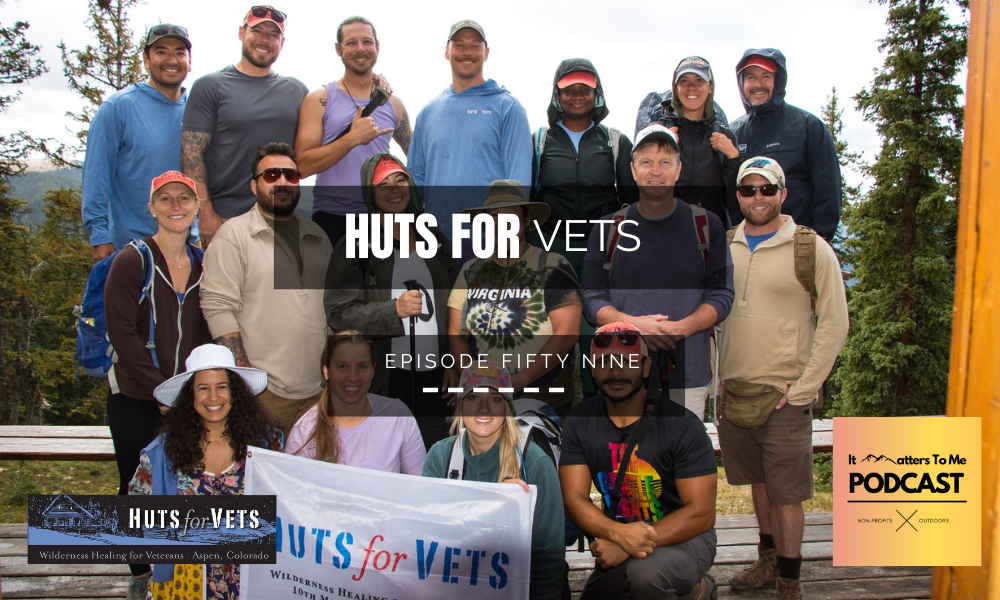
Founded in Aspen, Colorado in January 2013, Huts For Vets provides at no cost to participants, wilderness and communal experiences as therapeutic healing for U.S. veterans and active-duty service members.
Erik Villaseñor is their Executive Director and being an Army veteran himself with combat deployments to both Iraq and Afghanistan, he was once a participant at a retreat before stepping into the leadership role he has now.
Additional Links
Huts For Vets (Website): https://hutsforvets.org/
Huts For Vets (Instagram): https://www.instagram.com/hutsforvets/
Huts For Vets (YouTube): https://www.youtube.com/channel/UCBnZp3n-6whnzJ6A34UaJNg
It Matters To Me (Instagram): https://www.instagram.com/itmatterstomepodcast
It Matters To Me (YouTube): https://www.youtube.com/@itmatterstomepodcast
Transcript
Eric, how are you doing today? Welcome to the show. I’m doing well, Adam. Thanks for having me, man. Yeah, this is an honor to have you on because not only is the organization that you work for. Something that’s near and dear to my heart, but you’re also a fellow veteran. And I feel like every time I get the chance to, to have a genuine conversation with a fellow veteran, um, it just makes this whole podcast that much more special.
So I really appreciate you taking the time to talk to me. So you are the executive director of an organization called Hutts for Vets. We’re going to get into what that stands for, what you all do, what your mission is. But before we do. One way I like to start the show is with a question that’s a little bit more personal.
And that question is, If I knew you growing up, what kinds of stories would I tell about you? Right on, yeah. Thanks for having me, Adam. This question kind of gave me a chuckle. But if you were to tell some stories about me, about growing up, they’d probably be stories of me and the kids in the neighborhood that I kind of grew up in or spent most of my childhood in building sketchy ramps and skating them, having all my friends in the neighborhood over to my backyard and just putting together these probably not the safest ramps to be skating on with very limited material and knowledge of how to actually build anything.
I’m just having fun outside, you know, I feel like I’m part of that last generation that kind of was forced to play outside and, and, you know, mingle with your neighbors and stuff like that. So, yeah, there’d be stories like, like that. And you have kids yourself, don’t you? Yeah, yeah, I’m a father. We have, I have two kids, a seven year old daughter and a five year old son.
Do you push them to go outside? Like you did. Absolutely. Absolutely. Yeah. We’re mountain biking in the summer here where we just got some, a program in, in this town where I live in where they bring like hockey and ice skating to the community. And we’ve been on the ice like every night since it started and I’m over there freezing bundled up and they are just enjoying themselves, you know, and we like to hike and this last summer we also got up to some rock climbing.
So, yeah, raising, raising kids in Colorado is fun. Much like in adulthood, there’s no shortage of shiny objects, I think, to keep us entertained. Unfortunately, some of them turn out to be quite expensive. I just, I wish, I sometimes, as much as I love living in Colorado, I just wish that I had gotten into something like, I wish I had really gotten into chess growing up to be honest, low key.
I’m sure that, you know, it has its own travel expenses, but we joke about that, but that’s really cool. And I think the pushing your kids to be outside and part of that being part of your own story is definitely going to come up when we talk a little bit more about Hutz for bets, but Before we do that, you know, like I mentioned, the outset was Huts4Vets.
It’s in the name. It’s for veterans. You yourself are a veteran. How do you go from building, I’m going to call them sketchy bike ramps, sketchy BMS bike ramps to, uh, being a soldier in the army? So that journey, well, it’s, I mean, pretty straightforward. I was, you know, in high school. I was not the best student, unfortunately.
I did pass and I did graduate, but it wasn’t, It was something that was very much like a hurdle after hurdle after hurdle for me to get over, and I started getting, becoming aware that, oh, we’re gonna graduate, and we’re gonna leave this, you know, kind of space, and we’re gonna enter the real world, and I started hearing kids going to this college and that college, and it got accepted here, and it got accepted there, and I’m just going, Oh my gosh, like, I don’t have a plan, really, like, I didn’t really, unfortunately, didn’t put too much thought into that.
And I joined in 2005, at the height of, you know, the surge of Iraq and Afghanistan just started getting kicked off as well, and You know, the army was, was actively recruiting in my area and I saw an opportunity to go do something and to go do something positive or what I thought was positive and I didn’t really know this at the time, but it was, it was a way to really test my mettle, so to speak.
You know, I was heavily influenced by Black Hawk Down, Saving Private Ride. I know it’s cheesy as that might sound, but. Was rewatching these movies and really thinking to myself, what would I do in these situations? How would I react in these situations? And boy, did the army give me those types of scenarios.
I joined as an infantryman again, you know, didn’t fully, I mean, I kind of had an idea of what that was, but it was pretty young and naive and, you know, it was 17 when I joined, so I was very much, you Still, you know, a kid, so to speak, didn’t really have any real world experiences. I signed the contract in 2005 and by the fall of 2006 I was deployed to Iraq and on patrols every day, and you learn a lot of life lessons really, really quickly on on a deployment, especially a 15 month deployment.
You’re saying you. You walked into a recruiter’s office and within a year you were already in Iraq and Afghanistan. Yes. So for me, I didn’t commission until 2012. I got out in 2016. So I was a few years after you, but even then there was still a need. This was after the surge for sure. So that kind of played a role.
And I think just the route that I chose to go down the officer route, I think. Little bit of a role, but I mean, it took me years. It took me years to get into, you know, air quotes, the real military and so. When I meet people like you and I meet people that join so early on and it’s just crazy how that pipeline was so quick and how, you know, it really was something like you had to be careful going into a recruiter’s office and what you signed because it felt like, Hey, if you signed on the dotted line, like there’s a bus out back waiting to take you to bootcamp, if you’re ready.
Absolutely. Yeah, that’s how it was for me. You know, I was, I was. Kind of the ideal recruit, you know, no tattoos, no jail record, had a high school diploma, relatively fit. And so the pipeline was very streamlined. And I did find myself in Iraq pretty, pretty quickly thereafter. And I ended up only serving four years with two combat deployments, one to Iraq, one to Afghanistan, which was pretty good.
They were pretty much one right after another. And, um, that was the trend in those days as, as you may remember. And I, I quickly saw that I didn’t want to be part of that trend. I was like, I can’t do this one year on one year off type of thing. And, and in the infantry, you’re rolling the dice, you know, the more exposure to combat you get, the higher the risks go up.
And my enlistment was up and, and I had just met my wife here in Colorado Springs and I was just like, you know, I’m going to get out while I can. It was time to get out and using those GI Bill benefits. I got into art school of all places. So I went from the being in the infantry unit to the complete other side of the spectrum in art school in Denver.
So that was another experience in all of itself. For me, going from just Marine infantry back to school up in Boulder, especially being 30 years old and doing another bachelor’s, so most of my classmates were 18. I had some very critical thoughts about my fellow classmates because, you know, for me as a, Platoon commander, having 18 year old Marines in my platoon, I’d be in class and I’d look at like some 18 year old who clearly just got high before class.
And I’m like, I fucking hate you. I hate everything about you. You don’t measure up to what I know other 18 year olds can be. So looking back at your experience in, and I’m definitely not trying to put myself in your shoes or anyone else’s shoes that saw combat, but I would love to hear you. Talk about your experience, maybe not the gritty details, but in hindsight, how different was your experience in the army versus what you expected it to be at 17, having just probably watched black off down, you know, I just think you come face to face with, with reality and, and this kind of like life gets really boiled down to bare necessities.
And that was something. Right. You know, the movies try to show that and you hear people talk about it, but until you’ve literally come to depend on the person next to you, you know, you don’t really, it’s hard to really understand that and grasp that. And I think that was something that I just, I wasn’t aware of that until, you know, I went through those experiences.
And it was something that is missed not only by me, but, you know, many other folks that serve in combat and not in combat. You know, you just don’t get that camaraderie. That sense of brotherhood in kind of everyday life. And I also just remember experiencing this really huge amount of confidence knowing these are my brothers to my side.
Like we can do anything together. We can do anything. And whether that’s combat operations out of a patrol base in Afghanistan, or it’s You know, back in the rear with the gear doing the mundane stuff. Like we can literally do anything and just having that confidence was just as a game changer, really.
And I don’t know about you, but for me, the longer I’m out, the more I think nostalgic I become and the less, the less shit I remember of how much it sucked. And you look more back at times where it’s that type two fun where like, man, this really blows, but like, Hey, I’m with some really cool dudes. And so the longer that you’ve been out, what do you think you miss the most about being in the military?
I think for me, it’s purpose, mission, and just being part of a team. Honestly, I, I work remote also, well, aside from when we’re running these trips, but our team is kind of spread out throughout the United States and Colorado. And we don’t get a whole lot of, you know, face time. And whenever we do, and especially when we’re running these trips, like, that’s, I just like being part of a team and having, A bigger goal, bigger mission to work towards.
That is something that I most definitely miss. And, and also just having, knowing you have like a support system. Yeah, there’s maybe some chinks in the support system here and there. But overall, you have a support system there for you when, when it’s needed. And that’s one of the things that I miss most definitely is just that.
That’s so true. We talked before and I, and I’ve talked with one of your coworkers, who’s also in, was in the military. And one thing that we kind of touched on, and it’d be a mistake if a podcast episode came out and I didn’t talk about base jumping at least once, but that’s something that I identify with in the base community is just that ability, maybe Teamwork isn’t the best way to describe it, but that sense of camaraderie around some things where it’s like, Hey, we’re both, uh, huck ourselves off with something real stupid, but we’re in this together.
And it’s always hard for me to articulate kind of why I elevate the base jumping community above some of the other ones that I’ve been in and kind of compare it to that being in the military. You’re, you’re an avid mountain biker, correct? Yeah. Have you found any sort of relationships within the mountain biking community that kind of fulfill you in the same way that the military did?
And obviously, mountain biking is completely different than military, and a hard day on a mountain bike is going to be completely different than going out on patrol in Iraq in 2007. Yes, absolutely, Adam. You know, I moved after going to art school, moved to the western sub of Colorado to a small town called Rifle, and I started mountain biking while I was in Colorado Springs at Fort Carson with, with some, you know, one of my buddies that I served with, but in school, living in Denver, didn’t really touch my mountain bike a whole lot, get to Rifle and I’m like, well, there’s got to be trails out here.
There’s got to be people who ride out here. You know, Rifle at the time wasn’t really known as a mountain biking place. Uh, but quickly found out that there was a small community called Rambo, which is Rifle Area mountain biking organization. And they’re just a small club of enthusiasts and through this club, through mountain biking and more specifically, probably through trail building.
I did find that community, you know, where we’re. I actually had a hand in creating and helping bring this project to life of bringing 18 miles of brand new trail here to Rifle. And this project and the way the community came together did kind of bring some of that back for me, you know, and it was really the first time where I was able to experience that outside of the military.
Of course, Obviously, there’s the right mountain bike, you know, it can’t really compare the two, but it was it was that we had a bigger goal, you know, to reach, and we all worked together to do it. And I specifically mentioned trail building because, you know, you got to you got to recon an area you’ve got to.
Carry in tools. I mean, I use some of my old, like an old assault pack that I had in the army to do some of this stuff. And, you know, you have to plan and you have to have, you know, if you forget a tool back at the trailhead, like, guess what, you’re hiking the two miles back to go get it, or you’re not going to have that tool and that’s a little bit similar to, you know, planning a patrol in the army or something like you had to be prepared and you got to rely on, on the small team that you’re And I’m glad you mentioned that.
Cause that came. After my first Hutts for vets trip back in 2015, it was only after that point that I finally kind of like let my guard down, so to speak, and kind of say, you know, what, what else is there, you know, in this outdoor space, you know, is there, what, what other communities can be explored. And that’s really where my journey starts with Hutts for vets is, is getting outside.
And it was through hiking, through mountain biking, through trail building. That I did eventually kind of find that similar camaraderie. And it’s, it’s been a staple in my life up until this point. Beautiful. I love it when it works out this way and we can easily transition now into the work that you do.
And I think you, you, uh, alone deserve credit for that or else. Cause I would have been talking about all sorts of other things. So, uh, thank you for helping keep us on track. So the teamwork, this is that teamwork we’re talking about. So I have a fear that I will. put my foot in my mouth, even if I’m just reading text from a page, which would be the mission statement of Huts for Vets.
I would love for you to introduce the listener to what Huts for Vets is, and then if you wouldn’t mind telling your story of how you first came across them. Yeah. I mean, so our, our mission as it’s written out, you know, it’s to help veterans adjust to and enjoy civilian life by gaining tools for enhancing mental, physical, spiritual, and emotional health.
And. So that’s how it’s written out on our website. And how we do this is by bringing veterans from across the United States to Colorado, to our base camp. And we have, you know, we offer wilderness therapy retreats. So we take this unconventional nature based approach to mental health and wellbeing. Our programs offer, you know, guided hikes, group discussions.
Community building activities. We address the person as, as a whole, you know, we, we, we say frequently on our trips, mind, body, spirit, and we’re, we are really trying to do that. We have, we offer like intentional experiences, wilderness experiences. So we’re not just saying that we’re going to go hike up to this hut and we’re going to hang out there for a couple of days.
Like we talk about all along this hike. You know, it’s, it’s in a pristine wilderness area along, depending on what hut, but my favorite hike is along a creek and, you know, we, we set off this, we set the trip off with, you know, some quotes from Thoreau and Edward Abbey. And, you know, we encourage our participants to open up their senses, slow down a little bit.
You know, if we’re not racing to the top to get to the, to the hut, you know, we’re, we’re going to be deliberate and intentional. So, yeah, that’s, that’s kind of it in a mouthful, I guess. We can, we can break it down as you, as, as we go along here. And, uh, what is your introduction story to Hutz for Vets? So, I first got involved with Hutz for Vets back in 2015.
I had just moved. We just graduated, my wife and I just graduated college, and we just moved to the Western Slope. And, you know, I went into college. Like I got out in September and I was in college like October. So I really had no decompression time, no time to process. I was just kind of like, you know, art school, graphic design, learning, graphic design, like that provided a really good distraction from my four years, you know, in my two deployments, I was visiting the VA here and here and there going through that whole, you know, disability process, but never really took the time to focus on processing events, traumas, and taking some time for myself, intentionally.
So it was actually through the VA, one of these VA appointments, where I was handed a brochure for HUDS for Vets. And the psychologist is, was just like, I strongly recommend that you I lived like maybe 45 minutes away from the base camp and she kind of told me what it was. And I’m like, Oh man, this sounds like a bunch of hippie BS.
Like, I don’t, I don’t want to have anything to do. Do they give out Birkenstocks? Exactly. I was, I was very apprehensive and I pulled up the website, discussed with my wife. I was like, well, this is kind of, you know, what she’s recommending. And my wife’s like, well, there’s the application right here. Why don’t you just fill it out?
And man, that application was just on my open on my computer screen for like a couple of weeks and I would kind of like each day. Peck away at it and fill out a section. And I’m like, I don’t know if I want to do this. You know? I mean, it was just kind of like, man, I don’t know, really apprehensive, but yeah, I got a call from Paul Anderson, the founder and then executive director.
And he said, we’d love to have you out. And he’s, he seemed like a really cool guy, really, you know, humble and down to earth. And I was like, okay, cool. You know, somebody called me. They’re going to, they’re going to offer me a spot. I’ll take it. And. Wow. That decision, man, that made literally all the difference.
I went, I met a group of guys that were all kind of on, on struggling with different things and, and our, you know, some were from, we had a Vietnam veteran on our trip. We had Desert Storm. We had a pretty good mix. It was all, it was all men and just, uh, the experience, you know, Paul and his team then really pulled out all the stops with the food.
And I think a component of the program that I was really surprised about that, that I was surprised that I actually enjoyed was the philosophical discussions that we were having or moderated discussions that we were having. Paul had mailed me a notebook, you know, about a month before, and it was filled with poetry, everything from Shakespeare to Robert Frost at the road.
It was kind of thick. And I was like, Oh man, we have like homework. Yeah, I got reading assignments to do. Like, what is this? And, and that was a piece that, That I really, I mean, obviously I love the nature component also, but coming around the table and having a moderator ask us questions about the piece and even reading some of the piece as a group.
We weren’t having like a group therapy session. We weren’t talking about, Oh, that was this with this one time in Iraq or this, you know, that’s not what the program was or is. We were talking about Robert Frost and two roads diverge into wood and we, you know, all of a sudden we’re having these discussions.
And some of them, you know, do reflect on our past in the military. And most of them do. That’s kind of the framework, right? But it wasn’t like a dick measuring contest or sharing war stories. It was this like intentional, very deliberate way for us just to get talking and sharing some emotions, being vulnerable.
And that’s really where the magic happens. And I just had a really wonderful experience. The camaraderie, that camaraderie was rekindled. I stay in touch with a couple of the guys there that I’ve met, and actually some of them have come back for a trip. And that first trip really helped me, it gave me the space that I needed to process some things that I haven’t really processed.
I kind of had a new relationship with nature that was formed, you know, but before that, my last time being in the mountains was in the Korengal Valley in Afghanistan. And I didn’t have a positive relationship with nature at the time it was associated with. Afghanistan and combat in the Taliban. And so I kind of had to work through these things on this trip.
So I did a lot of, a lot of growth. And, and at the end of the trip, Paul goes, well, you’re local. So, you know, if you want to volunteer next year, you know, as a, as a peer mentor or whatever, you’re welcome to, I was like, absolutely. And that was how it started. And I just kept going. I kept, if I was invited to do something with Hudson Reds, I was there.
I’d come back for a trip a year, each summer, then that snowballed into helping Paul set up the website. No good deed goes unpunished. Absolutely. And I was happy to do it. I was happy to stay involved and help as much as I could, you know, and. It really did snowball from there, Adam, and to, to now where I am today as being the executive director, just so, so blessed and really thankful for the opportunity to, to carry on, you know, what Paul has started and grow the team a little bit.
And yeah, we can get into all that though. There’s so many streets we could wander down on this. And one thing before we get off track, Paul himself, he was never in the military, was he? Correct. Yeah, Paul civilian. In fact, he, he talks about this, you know, he protested the Vietnam war. He never protested the soldiers.
And you know, when he first mentioned that and the introduction, my very first time meeting him in, in the Hutch for vets on a trip, that’s kind of, that’s as part of his introduction. And I’m going, Oh, who, what? Like, we’re about four or five days with a guy who is not a vet. I didn’t really know that at first.
And it’s not something he, you know, he, it’s part of his introduction, but. Yeah, I was just really surprised and through that trip, I learned that Paul had a really good heart and big heart and was really trying to help veterans. He read somewhere the statistic for, you know, the 22 a day statistic and was just appalled.
He’s like, we need to be doing more. What can we be doing to be doing more? And he, he really put this whole thing together. The notebook is, is all his readings and this layout is, is his foundation. And he saw, he saw a way to help veterans decompress and cope with some of this stuff. And it’s, it’s amazing.
It’s, it’s, it’s just a really great thing. And when it comes to that decompression, I don’t, I don’t think anyone’s going to be surprised by the fact that like being outdoors is really good for your mental health and being outdoors with people who have somewhat similar experiences really is good for you to open up doors.
about yours. So I don’t, I don’t want to ask the obvious question of why do you think the outdoors is funny? Like we get it. It’s fucking beat outside. It’s great. But as, but when it comes to that decompression, I’m personally just interested to hear How, how does that conversation get started? Does someone just maybe along the hike to the hut just get the ball rolling and say, Hey, yeah, I was in the army, I was in infantry.
I was in Afghanistan in 2007. I went on this patrol and I saw the person in front of me get blown up by an IED and I and I, I had to be the one to take care of ’em. I had to call the medevac, or, you know, I, I was in charge of the CVAC plan and stuff like that. How, how does that conversation get started?
Yeah, that’s a good question. The discussions that we have are all moderated and they’re based on our notebook of readings. And some of that is, you know, comp, like veteran related stuff. And, and some of that is, you know, non veteran, I mean, like Henry David Thoreau is like, that’s not combat stuff, right?
But it’s through these discussions where a lot of this, a lot of the, the, the thinking time is, is being done and. You know, there, there’ll be a time in the trip where a veteran is sharing his thoughts on something related to the piece. And then he starts sharing maybe some things that he’s struggling with and everyone just listens.
And that’s kind of how I’ve seen these play out. We don’t really have, like, a structured therapy time, so to speak. Each trip does have a licensed therapist on the trip, but the intent of the trip is, is really not. Like a group therapy session, so to speak, but these conversations do happen and they do come up and, and we see that as a positive, you know, we, we, cause it, it means that we’ve curated a space where, you know, the veteran feels like, you know, Hey, this is a good time to bring this up.
These are the people that are going to really, really, you know, safe space, brave space, whatever you want to call it. And so. Yeah, that’s, that’s kind of how it happens. We don’t tip, we don’t really, we, we don’t necessarily say like, now’s the time for you to share your experiences. Like we’re, we’re not, and that’s not really our intent, but it does happen naturally and organically through our discussions, I guess, is the short answer.
Yeah, I didn’t imagine that you would have a schedule sent out ahead of time and being like, okay, at 1730, everyone’s going to start crying. There is a itinerary, so to speak, where we’re very relaxed and very flexible, you know, once you get out into the woods and into nature and away from Wi Fi and further away, you get away from everything with a group, like all of a sudden things start to happen.
So we don’t keep a rigorous schedule, but we do have a schedule, but typically in the evening after dinner. Is what we call just like free time or unstructured time. Like there’s going to be no moderate discussions essentially. And you know, time to relax, time to kick back, decompress, somebody go get the fire started and it’s really there that.
I think these conversations start to happen, you know, bonds start to being formed and and there might be some, some, you know, war story swapping, but there is again, we’ve kind of established like we’re up here for intentional experiences. So, like, if the conversation, like, you know, if you’re going to bring up something that’s going to completely derail that, like, maybe don’t bring it up or maybe talk about it with, you know, our therapist who’s up there.
So, yeah, we are intentional about setting those boundaries. And when it comes to. Maybe a success or a story that that stands out to you of someone who came into a trip. One person and maybe, you know, we don’t have to, if it’s not a true story, it doesn’t need to be told. But if someone comes in and by the time that they leave, you could, you could tell that they’re.
They carry themselves differently. Is there anyone like that that comes to mind or maybe even on a longer timeline? Is there anyone that, you know, beyond yourself that you could say that you’ve seen them from day one showing up and being either the timid guy who was too afraid to talk about his own experiences or, you know, the Dick measuring guy who all he wanted to do was talk about his pumps in Iraq and Afghanistan and, and has, but then Now, that person is someone completely different.
Do you have any, again, air quotes, like success stories or stories of, of someone notable? You don’t have to use details, but someone that sticks out in your mind like that? Yeah, absolutely. There’s, there’s a lot of stories like this that you mentioned, and I guess I can leave out names, but there was this one veteran who came on my first trip.
We’re hiking up and you can just hear like the pills in his pocket rattling like all of you know His pill bottles were rattling and I even asked him like what like what are you carrying in your pocket? He’s like, oh, those are the meds man. I’m like, oh wow. That’s a shit ton of meds, dude You carried Skittle?
Yeah, exactly and you know, I He was, you know, very quiet and, and so was I, I think a lot of people are actually like that at first, but he was very quiet, didn’t really want to share, you know, he would read when asked, but was kind of pretty much a closed book the entire time. He, you know, a couple of years.
So yeah, that happens. And then a couple of years later, he comes back on a trip and it happened to be a trip that I was volunteering on and, you know, he’s beaming. He goes, I needed to come back because I needed to redo this. I needed to have, I needed to reframe that first. That first experience, you know, really, A lot of things were revealed to him and that he could be, you know, making some change in his life.
And he, he did want to get off the meds. And he comes back and he’s smiling. He gave me a hug and I’m just going, what, like, dude, how are you? Like, tell me what’s been a couple of years, what’s going on. And he’s just like, I got off the meds. I started doing yoga. You know, I’m, I got involved with this other organization and, and I wanted to come back and just, You know, help any way, any way I can.
And, and, you know, that first trip, I just didn’t really soak it all in and I’m here to soak it all in. I remember the hike being very difficult for him. So he had gone on like a little bit of a fitness journey and to get prepared. And he was just night and day. And, and I was sitting around the fire with Paul.
And I remember Paul just saying like, man, how about this guy? Like, look, look at him, look at him now. And I’m just like, I know, man, that’s such an impressive turnaround. And, and Adam, there’s, there’s a lot of. veterans that have similar stories like that, you know, and I can actually go on and About all of them, you know and Myself included honestly, I I really I am a different person from that first trip in many in so many different ways and I think for us success what that looks like is is What our trip offers is is a reset for so many people and We’ve had people on our trips that happen, the trip coincides with around like a lot of life changing events that are happening.
You know, they’re leaving jobs, they’re leaving careers, maybe a divorce, maybe they’re getting married. And that trip seems to be happening at a time where they need the space and they need the time to really reflect and to decide like, okay, I am going to do this, or I’m not going to do that to make some hard decisions.
And, you know, just kudos to all our applicants and our participants who come out. And, uh, you know, take that leap of faith, so to speak, and, and do the work, you know, not a lot of people wants to, not a lot of people want to do that. They don’t want to do the work when it comes to their own mental health or some of the issues that they may have, may be experiencing from the military.
And I feel like our program does offer just this, this. This intentional space where if you need some, if you need some time to be, yeah, no one’s going to judge you, no one’s going to judge you. Seriously. Yeah. We, and we say that, yeah, like this is a judgment free zone and so yeah, Adam, there’s, I can go on and on, on success stories about veterans.
Well, damn, I wish I had asked that question earlier. I mean, yeah. Yeah, it’s, that’s good. It’s great. And, and story that you did tell that it was hard to maybe to, to single out that specific one, but I definitely don’t doubt that there’s other ones like that because, you know, if, to me, It sounds like coming on a Huts4Vets trips and just your own story of having that application open and you know, you didn’t just sit down and do it in one go.
It was, it took a lot, it took time, but once you get the ball rolling on these things and once you take that first step and that first step might’ve just been, Hey, I’m just going to open this browser tab to download this Huts4Vets application. That’s today’s victory. And tomorrow I will put my first name in and the next day I will put my last name and just, but building that momentum and getting over that initial inertia of reaching out for help or just even being inquisitive and curious and exploring it, it’s, it’s amazing what I have found in people that do.
Come to things like this, whether or not they’re military veterans, whether they’re just on their own journey for a mental health issue. It’s just, it’s so, so important just taking that first step and realizing that that responsibility is on you, like no one’s going to come to you and just plain speak.
No one’s going to come to you and, and. And get you on a path to mental, to positive mental health where like, that’s just the reality. And if you’re, if you’re waiting on that to happen, then like, you’re just going to keep fucking waiting. But if you’re willing to take that first step, there’s organizations like you and so many others out there that are just chomping at the bit.
To help people because it’s, it’s, it goes back to that camaraderie, it goes back to that teamwork. It just goes, it really is just so interwoven into a lot of our personal lives. And so, yeah, I think you did a great job telling that story. And, and I think it’s, it’s a great way to kind of maybe expand this a little bit when it comes to Huts4Bets future.
What, what do you? If I gave you, if I gave you the opportunity to, to, and I don’t want to ask like the cliche question of like five years from now, but if in a few years time you had the ability to tell me, this is how much Huts for Bets has grown. This is what our impact has been. This is who we operate with.
Like, where do you hope Huts for Bets? goes in the next couple of years, if not decades? Yeah, that’s a great question. So, Hutz for Vets has existed for 10 years. And when it initially started, it was, the intent was to serve men combat veterans
in these last, so I have to give you a little bit of history to talk about the future. The last two years, we really wanted to change that. And in fact, they had ran a couple of pilots. Women’s trips and they went well, but they were being facilitated by a team of men. And so it wasn’t a truly all women experience.
And so that, that has now changed. So we’ve, we’ve grown a women’s team led by one of our alumni and her name is Jen Petronas. And she has taken on the role of like the women’s trip leader. And we’ve built a team and now we have, so now we offer not only trips for men. Now we offer an all women’s trips and we offer co ed trips.
That’s something new that wasn’t offered initially. And so now we offer those three types of trips. And, you know, in the, looking to the future, we’d love to be at a point where we are partnering with, uh, Other like minded organizations, both in, in Colorado and out of Colorado. And we actually have started to do that.
We partner with the Pat Tillman veteran center out of ASU. And we were able to, they’ve essentially taken the Hudson reds model and are now running trips out of ASU for student veterans who are, you know, maybe struggling with their transition into college life. So our, I would like to see the next, you know, in the future, three, five, 10 years would be more partnerships like that.
And also, you know, maybe bringing our program to areas like on the East coast, and it won’t be necessarily probably a hut or the 10th mountain hut, but in a similar setting, and also, you know, partnering with organizations that are already serving disabled veterans. And so we can start kind of opening our program up to serve veterans with disabilities as well.
You know, and we’re talking, you know, more like wheelchair and double amputees and stuff like that. So, yeah, that’s kind of where I would like to see Hutch let’s go in the future. Well, if there’s anything that I can do to help, and that’s what I hope to do with, uh, casting. Uh, I don’t want to say raising awareness, but broadcasting your guy’s mission and helping other people understand that there are so many ways to help veterans like the founder Paul did, and even though you’re not a veteran, doesn’t preclude you from being able to be a part of something that does help veterans.
And I actually do know people that have felt a little timid about volunteering in some capacity with an organization that has a military affiliation, because they feel like they, since they didn’t serve themselves, that they, That wouldn’t belong. And it’s like, no, like, you’re the ones that we need, that they need even most.
And so I really encourage anyone out there listening, veteran or not, if, if this conversation has in any way, Spark something in you to, you know, take that first step. And if anyone out there wants to take that first step, how would you encourage them to engage with you in what Huts for Vets does? Yeah.
Check out our website, hutsforvets. org. Lot of information there on our trips and kind of what we do. Check out our YouTube channel. There’s a lot of video testimonials. To, to really get a, you know, a sense of the impact that we’re having. And you get to see the visuals, you know, see the hut, see the, the, the, the wilderness that we’re bringing these veterans to, and you can also, most importantly, see that impact you can follow us on Instagram, heads for vets.
Donations are always, that’s probably honestly, the, the, the biggest, way to support us is would be make a donation or if you know, any, any wealthy people. Hey, they got money to give. That’s for sure. Oh, they, they have no shame. Not even shame isn’t the right word, but they have no, they don’t feel guilty at all about giving their, their hard earned money to a very deserving organization.
So the way, yeah, I know we are, we were a little pressed for time and we’re going to go over, but thank you so much for taking the time to talk to me today.
 It Matters To Me Podcast