“ And they would say, Jen, I can find food if I’m hungry. There are places I can go for food. I can find a shelter bed if I need it, but I haven’t had a shower in six months or eight months or nine months, and so the idea of having mobile trailers meant that we could go directly to people.”
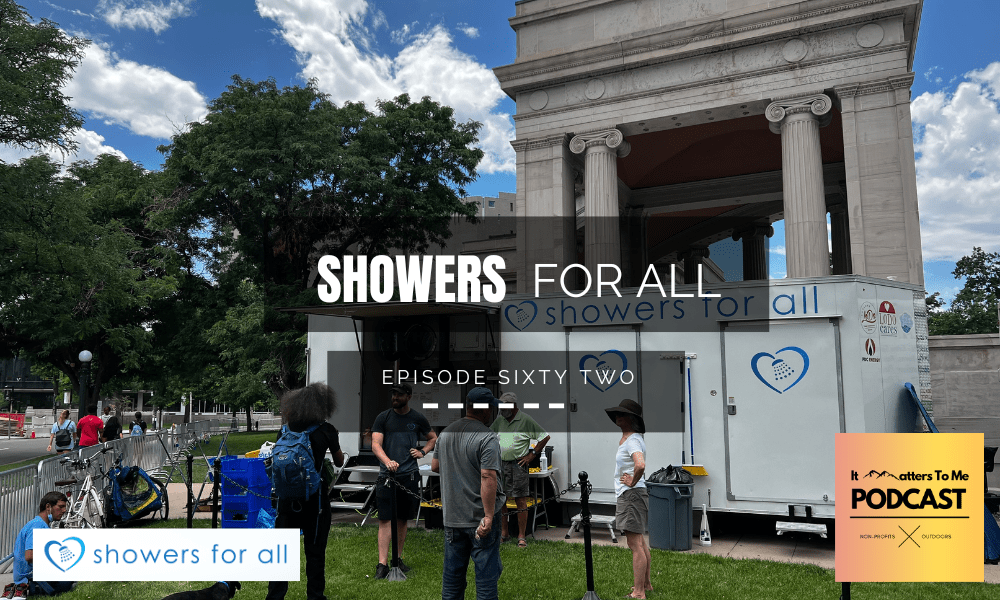
Showers For All is a mobile laundry and shower trailer, that serves unsheltered communities and helps cultivate community-building partnerships throughout Denver and the United States. With two full-service bathrooms and multiple washers & dryers, they’re able to deliver a critical, and often forgotten, service to those struggling with homelessness and poverty.
As a kid who grew up in a military family, Jenn grew up constantly making new friends. Always be kind and inclusive towards others, she felt the deepest of sympathies for everyone she met which makes her current role with Showers For All not that surprising.
We talk about the significant impact providing showers and laundry service has on the people they serve and how that need is, unfortunately, being felt all across the country these days.
Additional Links
Showers For All (Website): https://showersforall.org/
Showers For All (Instagram): https://www.instagram.com/showersforall/
Showers For All (Facebook): https://www.facebook.com/showersforall/
It Matters To Me (Instagram): https://www.instagram.com/itmatterstomepodcast
It Matters To Me (YouTube): https://www.youtube.com/@itmatterstomepodcast
Transcript
Adam Casey: Jen, welcome to the show. It’s an honor to have you. How are you doing today?
Jenn Kloeppel: I’m good. Thank you so much for having me. I’m so excited to be here with you.
Adam Casey: I’m really excited to have you on because you’re a local, here in Colorado and your organization Sours for All serves the community of Colorado and Denver, I should say. And I’m really looking forward to helping spread the message and hopefully getting some people interested into it. before I do that, though, one way I like to start the episode is ask each guest the same question.
Adam Casey: And it’s supposed to set the stage of just lightheartedness, but also give a little bit of a backstory to the person behind the organization. And that question is, if I knew you growing up, what kinds would I tell about you?
Jenn Kloeppel: that’s such a great question. I, um, I was the kid that, that felt everything and cared about everything, right? So the, the ant that was getting smashed on the playgrounds or the worm that needed to get off the sidewalk or the person who was having a really bad day. Uh, the stories that I hear about myself are that I was always.
Jenn Kloeppel: Um, feeling and always caring and the other piece of that is that I always wanted to do the right thing. So I wasn’t a rule breaker. Um, I, I really just kind of fell in line to the things that I thought that I was supposed to do and it wasn’t until, um, Probably college when I realized that, that I didn’t, I was following a path that I was told to do and not, not one that felt necessarily right to me other than, um, my, my deeply caring, deeply feeling, which I had also just kind of pushed my bigger feelings, my sad feelings, my anger feelings down.
Jenn Kloeppel: And so, um, I was the kind kid, the inclusive kid. I grew up in the military, so we’ve moved so much and. In that I was always trying to make new friends. And so, um, that’s. Those are the stories that you’re, you’ll hear. I think that, I mean, everyone’s, my brother is younger than me and he’ll tell you that I’m the funniest person in his life.
Jenn Kloeppel: Um, which is really funny for me to hear. So I think that I probably grew up really funny too, but I don’t have any memory of being funny. I just have a memory of feeling sad when people were excluded and constantly trying to make everyone feel like they had a place.
Adam Casey: That’s think that backstory is the best transition into the work that you’re currently doing, because I can say that, you know, running a nonprofit requires a certain level of empathy and sympathy towards others. And I think having that background from such a young age is why you’re here today and why you run Showers For All.
Adam Casey: I am curious though, what was the path that you were on in college and what was the pivot like for that?
Jenn Kloeppel: so, that’s a great question. So let me, let me back up a little bit. So in middle school, I don’t remember what happens, but something triggered this idea in me that I needed to build a place where, um, anyone could come, right? I had this clear idea that I was going to run a nonprofit, that I was going to adopt a baby.
Jenn Kloeppel: Um, and both of those things happen. But in that everybody in my orbit was like, you need to have a job. You need to go to college. What is your job going to be? And I didn’t know. How to get to any of those things. Right. So I said, well, I’m just going to run. This place where kids can come and they have a family and we build out this community around them that feels really good and safe and they get fed.
Jenn Kloeppel: And then I built this community garden on paper where, where adults could come. Everyone grows in this community garden. They live around there. It was like this beautiful village of people, right? And so in my, in my journals, you can see those things, but externally, I would say I’m going to be a teacher. I wanted to be a teacher since I was five and I love teaching, right?
Jenn Kloeppel: I, I know that I love teaching, but I was in college and I’m going through these teaching classes. And I was student teaching in, um, Watts in Los Angeles because I went to college in LA. And I remember leaving devastated because this little boy that I was working with. Had a bruise on his face from being hit and he, um, and he was hungry.
Jenn Kloeppel: And then I went to a place in Santa Monica and they were doing, um, this teacher that I was working with was bringing breakfast for kids and my heart was just. Broken, right? This these are school should be the safe place and I the structure of school was too confining for me, which now I recognize, uh, was like a lot of ADHD, right?
Jenn Kloeppel: It was my ADHD tendencies that I didn’t know as ADHD then that being stuck in this building with a structure that people had put in place for teaching kids was not the way that my brain was wired to work. Um, and so I remember graduating with my teaching degree and. It was June and I said, I just don’t think that I should be in a classroom.
Jenn Kloeppel: Um, and it was this kind of underlying feeling the whole time in my senior year. I started going down to Skid Row and I was volunteering at, The rescue mission down there. And I was serving meals and I was going out and talking to people and they kept saying, um, I just need.
Jenn Kloeppel: A shower so I can do this next thing, or I just need this so I can do this next thing. And so this just sat with me for a long time and I went and worked in churches, um, doing kids and youth ministry because that felt like a bridge from teaching, but it still wasn’t quite right. Um, and so it was just a lot of, Um, wrestling with myself, right?
Jenn Kloeppel: Wrestling with what, because I didn’t know that you could start your own nonprofit. I didn’t know that you could, um, create a job that, that you want to do, that you’re passionate about, that you’re excited about. My dad was so great growing up because he’d say, if you love what you do, then you’re going to love going to work every day.
Jenn Kloeppel: And I thought, well, I love kids. So teaching is it. Um, and it wasn’t until I was exposed to a classroom and, and the structure of teaching and I. I really do love teaching and It’s just not where I can do my best work. And so the transition through college kind of wrestling with all the ideas that I’ve had and the things that I felt.
Jenn Kloeppel: And then I had my daughter, uh, right after I graduated. And so then I was like, I just need, I just have to work, right? I just need a job so I can keep this child alive and get her to do all the things that she wants to do. And, um, And then over time, I started realizing that I probably did have, um, an option to create something that I was really proud of and, and my brain works so creatively and I, I like looking at problems differently and in different ways than most people, um, My partner at showers is like a, is a numbers person.
Jenn Kloeppel: He can tell you, uh, how much water we’re using down to the very last ounce. He is so structured and strategic. And I always think, well, the sky’s the limit, right? How can we do all of these things and build relationships and build a community around what we’re doing? And so, um, When I met him, he made me realize all of these things that have been sitting on my heart, um, and that I’ve been struggling with were a possibility.
Jenn Kloeppel: And so I don’t know if that answers your question very directly. It was this very long journey to get to where I was and a lot of questioning myself and then waking up one day and I, I remember texting my family saying, I’m starting this nonprofit. I don’t know how I’m going to do it, but we’re going to launch this Indiegogo campaign to do it.
Jenn Kloeppel: And I’m pretty sure they thought I was insane because the questions were, how are you going to make money? How are you going to fundraise? How are you going? All of, all of the really responsible things. But I think I’d gotten to a point where I thought if I don’t throw out all of the, what ifs that I’ve been wrestling with my whole life and through college, when I thought that I had to do.
Jenn Kloeppel: Have just a very clear cut job. Um, and so I, I just, I had to get to a place where I did it. Um, and it’s funny now because my dad, when I was going to college said, Jen, nobody knows what they want to do when they’re five years old. I don’t. And he sent me on internships to like marketing radio stations and event planners and all of these things to shadow.
Jenn Kloeppel: And he kept saying, I just, nobody knows what they want to do when they’re five, Jennifer really think about it. And I was like, but you. You want us to, you want me to go to college and have this job. And that’s the only thing I know, I didn’t know that you could go to college for nonprofit management or, uh, entrepreneurship or any creative things.
Jenn Kloeppel: Right. And so it took of life experience and then the willingness to kind of just throw everything that I thought I knew out the window. Um, and start over and feel, um, confident in that and willing to, and, and failures. I don’t look at failure as a bad thing, right? I look at failure as what did I learn?
Jenn Kloeppel: What have I gained? Where did, where did I make the mistakes? Right? So the, the freedom and the willingness that I gave myself to fail, um, and that felt freeing Scary, um, but I was ready to do that. I needed to start over. Um, so that, yeah, that’s, that’s why I landed here. I think and I have a, I had a pretty bad brain injury in 2018 and I, and I still have it, but I think that kind of triggered the spiral of you have to just do the thing that’s going to feel good.
Jenn Kloeppel: Um, and the thing that you’re passionate about and the thing that you feel like it’s going to change the way that other people are moving through the world too, right? Yeah.
Adam Casey: So it was almost, Cortez burned the ships. The only way forward is forward kind of.
Jenn Kloeppel: Yes.
Adam Casey: Kind of sentiment, which I can respect. And I know that Sometimes you just got to throw yourself completely at something. And if it crashes and burns, I think it’s like the Charles Bukowski quote of I’d rather be ashes than dust.
Adam Casey: let me go down in just like this. Burning, Phoenix of fire of, at least attempting to do something. So, all I could say is at five years old, I think I wanted to be a fire truck. my, dreams clearly, I don’t know. There’s still hope
Jenn Kloeppel: There’s still hope. We can build you, we can build you some gear. It would be like transformer, you know?
Adam Casey: that’s now you’re speaking my nerdy language.
Adam Casey: So, we’ve alluded to it. We’ve talked around it, but you run an organization called Showers For All. What is the mission of Showers For All and how would you describe the work that you guys do?
Jenn Kloeppel: Yeah, so our mission is to empower the journey away from homelessness by restoring dignity, hygiene and hope. And so, The way that we do that is by bringing showers and laundry directly to people, um, in the Metro Denver area. And I, we, we talked a lot about the value of having mobile services, right?
Jenn Kloeppel: Because people, when we were talking to people that we were serving, we were volunteering at shelters, we were providing food, we were bringing lunches down and we were having conversations with people that would be, that are our guests, right. And our friends. And they would say. Jen, I can find food if I’m hungry.
Jenn Kloeppel: There are places I can go for food. I can find a shelter bed if I need it, um, most of the time, but I haven’t had a shower in six months or eight months or nine months. And the, And so we started thinking about that, and we looked at a map of where options were to have a shower or do laundry, and there just aren’t any.
Jenn Kloeppel: Laundry is expensive at a laundromat. Shower services are just not really accessible. There aren’t public bathrooms that people can use. And so, The idea of having a, having mobile trailers meant that we could go directly to people. We’re not asking them to travel across the city after they had breakfast one day and then travel across to find us to take a shower and then go to where a caseworker is or a job is or, you know, Um, their community is we are going directly to where people are.
Jenn Kloeppel: And so our trailers do showers and laundry, their combination trailers. And, uh, the reason for doing both is, um, because, because having one of those would be easier, just doing showers would be so easy, right. Um, or just doing laundry, but we didn’t want people to have to put dirty clothes on clean bodies.
Jenn Kloeppel: We wanted people to be able to put clean clothes on clean bodies so that the, they are getting. All any hygiene that they need there. They are not going to have to put on clothes that are going to then give them a rash or make them dirty again, or maybe don’t smell the greatest or they’re not putting clean clothes on bodies that haven’t haven’t been able to be clean.
Jenn Kloeppel: And so. We were committed to doing both of those. Um, and, and so that’s what we do. And in, in that our priority is the relationships. I say, we, we just hired the, one of the most incredible people to, um, run our trailers on the grounds. And he, um, we said to him, our relationships are so important. We want people to trust that when they come to us, they’re going to be cared for.
Jenn Kloeppel: They’re going to be seen. We’re going to know their names. We’re not just giving them a number or scanning a barcode. We’re learning We are spending time in community with them and learning from them. And then they get showers and laundry. So showers and laundry are really second. Our relationships are first.
Jenn Kloeppel: Uh, and that’s something that we’ve been doing for years. Um, and that was, um, It was, it was a really big conversation for us at the beginning. And so our, our mission is to help people find dignity while, um, they, they are living, uh, outside. And, um, we do that through the shower and laundry service and through the relationships that we have.
Adam Casey: What was the impetus for this? Was there a single moment where you came across someone who said, I missed out on that job opportunity because I didn’t shower that day, or I had dirty clothes, or is this something where you wanted to build a community and just the idea of having a shower, which brings people together around something like that, came together.
Jenn Kloeppel: Yeah, that’s a great question. I think there were a lot of little moments, um, for my partner. He would say he was in Australia and saw this laundry truck and just thought it was awesome. They’re called orange sky and, um, and he’s because he’s like a strategic thinker. He was just like, this is so easy. We should do it.
Jenn Kloeppel: And for me, it was sitting with people who would say, um, I, I can’t walk into a place and not be stared at and feel uncomfortable because of how I look or how I smell. And then there were kids that were coming into schools that would, would miss hundreds of days of school because their parents didn’t want them to go because they were unclean because they’d been sleeping outside and they didn’t want somebody to call, um, CPS on them.
Jenn Kloeppel: Right. And so it was a lot of moments like that for me that, that said that hygiene needs to be a priority. And then I think when I was Um, at Colorado Coalition, like 10 years ago, Colorado Coalition for the Homeless, and I was touring their health clinic and. There was a man sitting outside and I, I said hi to him.
Jenn Kloeppel: And, um, his name is Brad and we just started chatting and I said, are you, are you heading in there? And he said, I can’t. And I said, well, what do you mean? It looks like you need, he had this huge gash on his leg. So it looks like you need some care. And he said, I, I don’t want to go in there because I’m so dirty and I can’t deal with being looked at, um, in a certain way because I’m too dirty and I, now, now this wound is dirty, right?
Jenn Kloeppel: And that just sat so heavily on my heart and in my head. And so I think so many moments like that where people were avoiding medical care or they were avoiding education or they were avoiding going into public places to use the bathroom or to order. a drink or something because they didn’t want to feel ashamed of their circumstances or how they looked or felt, right?
Adam Casey: That’s really surprising, I think. I think,
Adam Casey: it’s the ancillary effects of not having a shower for someone who owns a home it’s more seen as the social acceptance by others, maybe I come across as unclean and dirty, but that’s the extent of it.
Adam Casey: It’s not
Adam Casey: any major life implications, but what I’m kind of now thinking about is just the effects, not having a place to clean your clothes and shower not only has on the individual, but just has on the interactions that that person has with other people.
Adam Casey: And the story of someone who had a cut on the leg who then couldn’t go to the hospital or didn’t feel like they should go to the hospital or get seen then let’s something like that just become so much more of a problem and is even more of a challenge to deal with. And it’s simply could have been almost solved just by having places to clean themselves.
Adam Casey: And so that’s not something I would really think about.
Jenn Kloeppel: Yeah. It’s, and if I, can I share a story with you really quick to make a connection with this?
Adam Casey: You’re, you’re more than welcome to share as many stories as you would like.
Jenn Kloeppel: So thank you. I think that what you’re saying is so powerful because we don’t think about not showering every day, right? We, we get up, we work out, we take a shower, we clean our clothes. We’re never worried about, um, leaving when we’re housed. And, and there, there were two instances that early on that really have stuck with me for a long time.
Jenn Kloeppel: And so we have this, we had a college age student that was showering with us, um, during COVID. And he said, I, COVID is really good for me because he couldn’t afford the dorm. So he was just paying for classes, right? So he could finish. And so he’d come to us. He said, because when I walk into a college class before COVID, people could tell that I was homeless by my hands.
Jenn Kloeppel: They knew that I was homeless because my hands were dirty. Cause I can’t get them clean. There’s no amount of cleaning when you’re sleeping outside, eating outside and everything. And so COVID has protected me from that because I’m on zoom now for classes. And I just thought about how hard that is. hard that is because you’re this person is trying to go to school and is it the barrier for him to go to school is that everyone’s going to know his circumstances, right?
Jenn Kloeppel: And not understand it. And then the other one is, um, this man, Neil, who we had spent a time with when we were in civic center park, actually during the pandemic. The pandemic lockdowns and he came to us with this port in his chest and you could tell that it was infected and he started talking to us and he said, can I go, can I take my shower and do my laundry at the end of the day?
Jenn Kloeppel: Because it’s going to take me a little bit longer. And we said, sure. We got to talking with him and it turns out he had terminal pancreatic cancer. And so he got in the shower at the end of the day and we could hear him groaning and, um, from the inside and he popped his head out and said, I just need a little bit longer.
Jenn Kloeppel: Is it okay? And we don’t, we don’t time limit people. Everyone’s just kind of manages their time knowing people are behind them. And we said, absolutely take all the time you need. And. Um, he came out with this big smile on my face and he said, I can’t wait to go in for my treatment tomorrow because for the first time they’re not going to have to clean my wound, my port entry place before I get treatment because I was able to do it today.
Jenn Kloeppel: And he said, I feel so much shame and sadness every time I go in and they have to treat an infection for me. Around this entry place before they can treat my cancer, um, because I don’t have anywhere to keep it clean and, and everyone’s so frustrated, I can tell that they’re frustrated and they’re trying to be kind, but I can’t, how am I supposed to do this?
Jenn Kloeppel: And he said, I will be at this trailer every single day. Until I’m gone. And, um, he did. Neil spent six weeks with us, eight weeks with us. And he would come and shower. We do his laundry and talk to him. He was fixing bike wheels. He fixed my daughter’s bike actually one day, um, because it was the back of my car and he asked if I need to help with it.
Jenn Kloeppel: And he would do art with people and tell stories about his life. And then, um, when they were ready to move him into a hospice facility, um, he came to us and he said, I told them I don’t want to because I want to be around people Who care about me, um, before I go. And so we spent one last day with him and then the people that he had become friends with on the street sat with him until, until the end.
Jenn Kloeppel: And, um, it was such a gift that Neil gave us selfishly to, to share his story with us and be so honest about the complications for his treatment and for, um, the lack of hygiene access. And I think that moment, um, yeah. Was such an incredible reminder of why, why this matters, right? Of course we want people in housing.
Jenn Kloeppel: Of course we want people fed, of course, all the things we jobs, but, but until we can care for basic human needs, um, like meals, I don’t, I don’t know how they can move through a world feeling good and healthy, and I think that having that shower and that laundry shifted his willingness to get treatment and his ability to get treatment because we removed the barrier.
Jenn Kloeppel: For feeling clean and good enough. And I think a level of shame too.
Adam Casey: What a powerful story. I’m sure that there are those days where it’s hard and you kind of have that suspicion or question of, is this the right thing I’m doing? Is this where I’m best focusing my energy and a story like that kind of brings you back to the center and helps you stay focused on the work that you guys are doing.
Adam Casey: So that’s, that’s amazing.
Jenn Kloeppel: Thank you. It was, he’s so special. He’s so special.
Adam Casey: well, I was going to ask about unique stories about, I don’t know anything is going to be able to top that, but I am curious. I think looking on the Showers For All website and doing a little bit of research, one story that stuck out to me and I hope I pronounce his name correctly is Osage.
Jenn Kloeppel: Yes. Osage.
Adam Casey: I wanted to ask about Osage and see what his story was. And if you wouldn’t mind just kind of giving us the second act of this independent stories that Showers For All is having
Jenn Kloeppel: Yeah. So Osage is, um, he is one of those people that he walks into a space And lights up, lights it up, right? He is, um, he radiates joy. He radiates kindness. He is, when he is, um, when he loves you, he loves you so incredibly well. And he is a protector and, um, a veteran. And he, um, was one of our very first showers at the shower trailer.
Jenn Kloeppel: And, um, Came out just so fired up. So he has, he has been such a bright light for us. He is, he disappeared for a little bit, um, because he had gone to a different town and came back and he said, Jen, I came here to find you first. And I, and, um, he, so he is. a war veteran. He has, um, military benefits. I, I can’t, don’t know why I can’t think of the word right now.
Jenn Kloeppel: Um, he was honorably discharged from the military so he can go to a VA hospital for treatments that he needs. So he has some plates in his body. He had a brain injury and so he has some, um, cognitive stuff going on. Um, and he, um, Spends the little money that he gets every month on his medication, and he said to me, Jen, I, I stopped medication to pay for a house, and I didn’t feel like, or to pay for housing, and I didn’t feel like myself.
Jenn Kloeppel: I know that I need this medication, and so, that’s the choice I’m making, is to get the meds that I need, and He, he, he really can’t work right now. And so he is, everyone knows him on the streets of Denver. And this is the commitment that he’s made to his life is to make sure that he is a healthy person to be around and his, he is taking care of his body.
Jenn Kloeppel: Um, and so that’s heartbreaking to think about the ways that we’re letting people who, um, have, have given so much of themselves down. And so his, his VA benefits, he’ll go check in with them. He’ll get the support that he needs. He, we named our first trailer after him. Um, and he, he brings people to us regularly.
Jenn Kloeppel: He, um, if somebody, something happens, he’ll say he is the first person people call if they need help. And it’s really beautiful he was in a sanctioned tent, um, in Denver for a while. And then. He, he left because he was protecting somebody and, um, it got physical and so they both got removed from the space, which was such a bummer.
Jenn Kloeppel: But he said, I, I am accountable for my actions and this is how I responded and I shouldn’t have. And so he’s such, such, such a great example for all of us on, um, Being accountable and also the way that we care for, for people and for the space that we’re in.
Jenn Kloeppel: He had me talk to his mom one time and she lives in Kansas. And she said, Jen, he is, he’s always talking about all his friends. And sometimes we’re not sure if, um, how many of these friends he has, but then he puts us on the phone with you you tell us how much he’s loved. And it’s just so reassuring. Thank you. For us that, that he’s okay. And so he, he just loves people so well.
Jenn Kloeppel: Um, and he will show up to places and, and jump in and help where he can. And so it’s, he is just an incredible force and the military was so lucky to have him and we are so lucky that we have him
Adam Casey: sounds like my kind of dude.
Jenn Kloeppel: Yeah, he’s a good guy. He’s so good.
Adam Casey: I think a good setup would it be what is Showers For All physically? Is there a permanent structure in place or is it still a trailer?
Adam Casey: Describe what the scene of a shower and the laundry facility is for someone who walks up to wherever you’re located.
Jenn Kloeppel: Yeah. So we are still mobile and here’s um, It is it would be easier to have a permanent place We know a permanent building right for power for water for all of those things Um, but we when we set out to build our trailer We decided that we were going to build it ourselves because you can buy Stock trailers, like for festivals and there’ll be fine.
Jenn Kloeppel: They’re really expensive. We can build our trailers significantly cheaper, like 80, 000 cheaper. Um, and so, and we can build them the way that we want. We knew we wanted toilets in them because people deserve a place to go to the bathroom that’s private. We knew that we needed outlets. We needed full showers, ADA, um.
Jenn Kloeppel: Compliant showers, we knew that we wanted the washers and dryers in there. Um, and that it was going to be warm in the winter. So we have heating. And so we, we built them ourselves. So each trailer has two bathrooms that are full size and we wanted it to feel like home. We wanted it to be private. We wanted it to be special. We clean after every single guest. So everyone’s going in to a clean, dry shower. Not like the pools where you walk into a pool bathroom and it’s like wet and there’s hair everywhere.
Jenn Kloeppel: We did not want that. We wanted this to make people feel like they were important and they mattered. Um, so, we tow it with a, with a truck and our truck is, we have no truck right now because it’s dead. So we’re looking for a truck.
Jenn Kloeppel: That’s what we got is this big empty metal trailer and then we built walls into it and all of the plumbing and we put in nice flooring. And Waterpik gave a donated shower heads to us and, you know, Uh, the water heater is instant hot water heater.
Jenn Kloeppel: And the other thing we hear a lot is this is the first warm shower I’ve had in a long time. Um, so when people come to us, they check in, we, we greet them. We greet them by name. We get their laundry into a laundry bag and we do everyone’s laundry from start to finish washer dryer, and then we fold it before we return it.
Jenn Kloeppel: And the question people ask all the time is why are we folding it? Um, if it’s going to get put in a backpack or whatever. And I said, well, because it, it feels special. It feels good for somebody. If somebody wanted to fold my clothes all the time, I would be so happy, right? Just to have one less thing to worry about and to make it feel like my clothes mattered enough for you to fold them.
Jenn Kloeppel: Um, and I love when we had, uh, a man come to us and we handed him his folded clothes and he started crying. He said, nobody’s folded my clothes since my mom did 40 years ago. Thank you so much. And so it does matter that, That touch matters. Um, and then we, we get people in the shower, um, and we don’t give them a time limit.
Jenn Kloeppel: And most of the time, our averages are 15 to 20 minutes because they want everyone behind them. That’s waiting for a shower to be able to shower. Right. And so we have. 12 hour days, eight hour days, however, wherever we are based on location and they want everyone to be able to get into that shower. And so once they get in the shower, everything’s inside.
Jenn Kloeppel: We have the shampoo, conditioner, soap. They get a fresh kit, which is a hygiene kit with toothpaste, toothbrush, all any sunscreen, hand sanitizer, anything you might need in that and they get to take that with them when they go, but we have Pumps in the showers. And so they’re getting a clean dry towel.
Jenn Kloeppel: They don’t have to worry about that. Their clothes are getting clean. If they don’t have anything with the clothes on their back, we have spare clothes that we give them and then they can take them if they want, or they give them back to us and we wash those. We have really tried to think about anything somebody may need.
Jenn Kloeppel: There’s outlets to plug phones in, or there’s hair dryers if you need to blow dry hair after because it’s cold outside because it’s winter. Whatever it is, we wanted this experience to be one where They felt like they got this private space that they never have for the duration of the time that they’re with us.
Jenn Kloeppel: And while they’re waiting, we have water and we partner with groups to provide lunches, or, um, we have outreach workers that may come check in or they’re just hanging out with us and each other. And that’s really beautiful too, but it’s, it’s the safe space. And we work really hard to ensure that it stays safe and it stays a place where people feel good coming.
Jenn Kloeppel: and that takes time and that takes trust and we really haven’t had, many issues. I can think of two and, and those were dealt with really kindly and gently, by everybody and it’s a process to get people there, but they see this giant trailer with Showers For All.
Jenn Kloeppel: And the excitement when people ask, is this for me? And you say, yes, it’s just incredible and sad. Cause I don’t, I don’t want people to like most exciting things for somebody to be a shower, but how beautiful that it is. And that we get to be stewards of that.
Adam Casey: Do you have to remind people about the fact that other people are there to also shower and use the laundry? Or do they just naturally have this understanding that other people are coming in and so they shouldn’t take the hour, two hour long hot shower, even though it might feel good?
Jenn Kloeppel: that’s such a great question. Um, they just naturally do it. There is this, this deep care for each other. Um, even if it’s, uh, subconsciously that they, that there are other people waiting, but there are other people that also need this. And so we really don’t give reminders. We’ve, we’ve had to knock two or three times, but that’s, that’s a safety check, right?
Jenn Kloeppel: We just want to check to make sure you’re okay. One time, somebody had fallen asleep because they were so exhausted from being up all night inside the trailer and it felt. They felt like they could go in there, lock the door and take a nap. And so, otherwise people are, are quick and they want, they, they want everyone to share.
Jenn Kloeppel: Sometimes we have people come and say, Well, they can go in front of me because they have, they have to get to this, this meeting or they have to get here first. So let them go and then I’ll take their spot. So it’s, it’s a really beautiful community of just caring for each other and intentionality around time and, and, and energy to get in that shower.
Jenn Kloeppel: So we don’t, we really do not have to police that at all which is great. I don’t want to have to do that either.
Adam Casey: That’s what I’m really loving about this so far is just the showcase of inherent humanity that we all seem to have and how we all naturally, hopefully have that, sense of compassion towards other people, even when we’re down on our luck and we’re, we’re struggling ourselves, but we still have the capacity to think of other people.
Adam Casey: So that’s, that’s really. That’s really hitting me right, right in the feels
Adam Casey: I still haven’t found that bone in any x ray, but it’s hitting me right there. So that’s, a great, that’s a great story. What does growth look like for you guys? And is it something where you’re trying to just expand in the city of Denver? Or is it something where Whatever term we want to use, there is a, there is something happening across the country where homelessness is on the rise. And do you feel like you’re ready to expand to other cities or do you think that your attention and energy is best served staying here in Denver and growing the impact here?
Jenn Kloeppel: that’s such a great question. And there’s several answers to that. So I think what we’ve done over the last year, we’ve started expanding through the metro area. So we’re in Arvada. We’ve been in Aurora. We’re working with Inglewood. There are. Cities around Denver that we’re actively working on.
Jenn Kloeppel: I get emails every single week saying, can you come do this here regularly? Can you be here regularly? I have a list of 64 locations that want our services, 64.
Jenn Kloeppel: We have three trailers and we have three team members. Our funding has taken a huge hit this year. It’s down 47%, if I’m being really honest.
Jenn Kloeppel: And that’s terrifying. Because our services can’t stop. The demand is up so much. I think that people are really tired of talking about homelessness in Denver. I think that is this idea that the, the initiative to house a thousand people is solving everything because you’re not seeing as many people, but there’s people being moved out of the city of Denver and to other cities.
Jenn Kloeppel: Right. And so, Our challenges have shifted. Our challenges are funding challenges. Our challenges are getting people to pay attention to something that they truthfully, and I understand, are tired of having to pay attention to, right? There are so many things demanding money and time and attention that this doesn’t feel, this hygiene thing doesn’t feel good.
Jenn Kloeppel: And so in order for us to grow, There has to be a funding shift, right? We have to grow our team. Kellen and I have been doing this since 2018 together. It was just two of us for a long time and we worked full time jobs, in addition to this. Then we hired, Corbin who was incredible. He was a volunteer first and then we hired him and then he moved on to his next thing and it was such a celebration for him.
Jenn Kloeppel: And then we’ve hired. Jason, who is running our trailers now. But we need more people, right? We need bodies and we want to pay our people well, and we want to make sure that they’re cared for. and we want to operate our trailers effectively on schedule.
Jenn Kloeppel: We want to grow. The goal was always to expand to different parts of Colorado to expand to different cities around the United States.
Jenn Kloeppel: Detroit has reached out to me. St. Louis has reached out to me. There are cities in California that have reached out Utah. We have places that want the Showers For All there.
Jenn Kloeppel: And we want to be there. The barrier for them. Which then becomes a barrier for us is that they also don’t have funding for it. We know that the need is there. We know that not every single person is going to be housed and that the homeless numbers are on the rise. And so the Showers For All the mission and the work that we do is essential.
Jenn Kloeppel: And it’s not being funded by big, like big cities or by. big corporations yet, I believe deeply in my heart that it’s just the right connection That’s gonna get us to that next step to do this really nationwide and that’s our hope growth will look like for us adding to our team. It will look like expanding throughout the United States and we’re ready to do it and we’re ready to build trailers for other people and train them on best practices that we’ve learned and There are other Initiatives and other things that we have also come to realize are going to be really essential
Jenn Kloeppel: and so, we need the last time we did accounts, the city of Denver would need 24 trailers to serve every single person living on the streets once a week. Which is. Insane, right? So then you think about the country and how many trailers we would need to do that. It shows the need.
Jenn Kloeppel: We believe in that there are people that deeply believe in it. We are, excited about the possibility to build more trailers in the future. We’re excited about the possibility to move to other cities and help them really launch. We’re excited for people to really pay attention to. The way that hygiene makes them feel, and the impact it can have on people externally as well.
Jenn Kloeppel: And so, we are always innovating and always dreaming of the next thing, for Showers For All, and hygiene access. As we continue through this year, our hope is that we can stabilize our financials. Grow our team, and then we can figure out how to service all the places that are demanding what we need.
Jenn Kloeppel: The dreamy answer would be we have all these other incredible projects that we’re fired up about, which is true too. And we want showers to be successful, obviously, and serve the people that we need to serve.
Adam Casey: The dreamy answer is also the scary answer and as scary as it might be that the funding right now is not where it needs to be, is probably something that weighs on your heart and mind every day.
Adam Casey: So I. I wish I had a magic wand. But hopefully this just in our own small way, doing this interview and getting this episode out there we’ll help other people get more involved.
Adam Casey: Speaking of which, as we wind things down. How can people get in touch and help support Showers For All
Jenn Kloeppel: yeah, thank you for asking. Um, we, if you go to our website, we have at the top and not an option to donate, you can do monthly donations, which is our refresh community. So you get unique stories, through your monthly gift every month. And that, that helps us just plan forward. It helps us know what we are guaranteed to have every month and then what, where the deficit is.
Jenn Kloeppel: How much do we have to raise in the meantime, if you have. Family funds or a Business that that wants to donate and be a part of it. You can email me at contact at dignity project. com And that’s on our website too showers4all. org and we have volunteers on the ground all the time helping fold laundry and clean bathrooms and greet our guests and My favorite thing I hear all the time is when you said clean bathrooms I was really stressed and I came and I realized how great it is And how therapeutic it is and how fun it is to then?
Jenn Kloeppel: Set it up for the next person and get to connect with people that are coming and so it’s not bad It’s really not bad. And The the laundry piece is really great to fold and return and and just to get to be outside, right? You get to be outside. How grounding is that that you get to spend the whole day outside connecting with people?
Jenn Kloeppel: And So we we need volunteers and we take kids for volunteers as well. And then I think just sharing sharing what we do, sharing on social media, sharing with your community, sharing this podcast. Um, any, any share that we get helps spread the word about the value of hygiene and, and how essential it is.
Jenn Kloeppel: And so those are big ways you can donate, you can volunteer, and then you can help us tell the story of Showers For All. And I’m always happy to chat about it. I’m, I’m always so proud of the team that, that I have and the guests that we have coming through. And I would love to share how incredible they are and how lucky I am that I get to be a part of something so great.
Adam Casey: no shortage of opportunities for people to get involved is what I’m hearing. And that’s, yeah, no excuses. This is the only part of the podcast where I would admonish anyone that there’s no excuse for not getting involved in some capacity
Jenn Kloeppel: oh, I was just going to say, I think the other thing is, is if. There are people that sometimes do this and they’re like, I, I don’t need to because it’s, it’s their fault that they’re out there all the, all the reasons why you don’t feel like you need to help or, um, just whatever feelings that you’re, that people are wrestling with sometimes that say, no way, this is not worth my time.
Jenn Kloeppel: And I would challenge them to come out anyway, because I’ve had. More people come out after telling me how useless it is and then end up volunteering with us for years because it shifted their perspective about the in house population, about the power of hygiene, about where their dollars are going, all of those things.
Jenn Kloeppel: And so even if you’re uncomfortable with it, even if you think it’s silly and the people don’t deserve it for whatever reason, I would challenge them to. I would challenge you to come out anyway, come experience it because if it could shift your perspective, and if not, well, thanks for, thanks for trying, right?
Jenn Kloeppel: I’m willing to have my first perspective shifted by experiencing something. And if I still walk away and think it’s just not for me, then that’s okay too. But at least you can say that you tried and you invested time in it.
Adam Casey: The challenge has been laid down I like that. So well, I will make sure to include links, To the Showers For All website, to the dignity project website, which I will explain on my own, but then also make sure that your email is in the show notes for anyone who wants to get in touch and who now it wants to accept this challenge
Adam Casey: and to get involved.
Adam Casey: So, Jen. Thank you so much for talking to me today. This has been such a fun conversation and there are so many questions that I have left unanswered or unasked that I would love to learn more about. And hopefully in the future, I get to ask you those questions
Jenn Kloeppel: yes. I would love that so much. Uh, anytime I’m happy to chat and thank you so much again for having us and for celebrating and sharing about Showers For All. It means a lot to us. So thank you.
 It Matters To Me Podcast